Husky Asphalt Paving

Call for a Free Estimate(951) 900-3806

Author name: admin

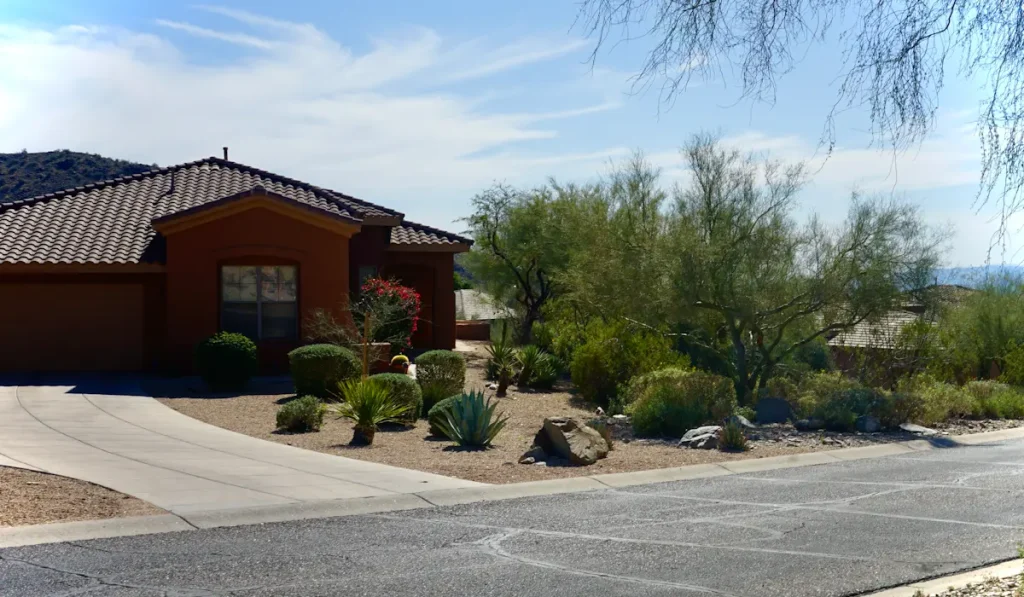
Concrete driveway meeting an asphalt street at a desert-landscaped home – asphalt vs concrete driveways in Riverside heat

Asphalt vs Concrete Driveways in Riverside’s Heat

Asphalt vs Concrete Driveways in Riverside’s Heat We should say up front that we pave with asphalt. So take the comparison for what it is, but we’d rather give you a straight answer than talk you into something that isn’t right for your property. Because concrete genuinely wins on some things. If you’ve got the budget and you plan to be in the house another 25 years, it’s a legitimate choice and we’ll tell you that on the phone. What most homeowners in Riverside are actually deciding between is a lower cost surface that needs attention every couple of years, and a higher cost surface that mostly doesn’t but is harder to fix when it does go wrong. Here’s how that plays out in our climate specifically. Asphalt vs Concrete: The Short Answer Asphalt usually costs less upfront than concrete, sometimes substantially less. Concrete can last considerably longer than asphalt when properly installed and maintained. Factor Asphalt Concrete Upfront cost Lower Roughly double Lifespan here 15 to 20 years 30 to 40 years Usable after install 3 to 5 days 7 days, 28 for full strength Repairs Blend in well Visibly patched Maintenance Seal every 2 to 3 years Occasional, optional Surface temperature Hot Cooler Neither one is the right answer for everybody. The deciding factor is usually how long you plan to own the house. How Each One Handles Riverside Heat Concrete stays cooler at the surface, while asphalt remains more flexible under temperature and ground movement. That’s the trade nobody explains clearly. Concrete is light colored, so it reflects heat instead of absorbing it. Barefoot in July, the difference is real, and it matters if you’ve got kids or dogs using the driveway. Asphalt gets hot and stays slightly pliable in extreme heat, which is why kickstands and jack stands leave marks in August. But that same flexibility is what lets it move with the ground instead of fighting it, and in Riverside the ground moves plenty. What Riverside Soil Does to Each One Expansive soils can challenge either material. Asphalt has some flexibility, so it can tolerate minor movement better and its surface cracks can often be repaired. Concrete is more rigid, so significant subgrade movement can lead to slab cracking or displacement. Ask any contractor what your soil is like before you commit either way. It changes the math. What Each Costs Over Twenty Years Upfront, asphalt is the clear winner. Over two decades, the gap narrows more than people expect once maintenance is included. Roughly how it shakes out: Asphalt: lower install, then sealing every 2 to 3 years and crack filling, plus likely a resurface somewhere around year 15 Concrete: higher install, minimal maintenance, but any significant repair means replacing sections rather than patching The honest summary is that asphalt costs less to get into and more to keep, and concrete is the opposite. If you’re planning to sell within the next several years, asphalt’s lower upfront cost can make it the more practical choice. Which One Is Easier to Repair? Asphalt, by a wide margin. New asphalt bonds to old asphalt, so patches and resurfacing blend into the existing surface and the driveway looks whole again. Concrete repairs don’t disappear. A patched slab shows a color and texture difference that stays visible, and badly cracked or spalling sections usually get replaced rather than fixed. This matters more than it sounds. A twenty year old asphalt driveway that’s been maintained can be resurfaced and look new. A twenty year old concrete driveway with a cracked slab looks like a twenty year old concrete driveway with a patched slab. How Long Each One Actually Lasts Here Concrete lasts roughly twice as long, about 30 to 40 years versus 15 to 20 for asphalt. Both numbers assume the base underneath was built properly, which is the part that decides more than the material does. Where each one tends to fall short of those ranges: Asphalt drops to 10 or 12 years if it’s never sealed, because UV dries out the binder Concrete cracks early if control joints were spaced wrong or the subgrade wasn’t compacted Either fails well ahead of schedule if water gets under it and stays there A cheap install of either material will underperform a quality install of the other. That’s not marketing, it’s just how paving works. Maintenance: What You’re Signing Up For Asphalt asks for a little attention regularly. Concrete asks for almost none until something goes wrong. Task Asphalt Concrete Sealing Every 2 to 3 years Optional, every 5 or so Crack filling Yearly before winter As needed, harder to do well Oil stains Sealcoat covers them Can stain permanently Resurfacing Possible around year 15 Not really an option If routine upkeep isn’t something you’ll realistically do, factor that in honestly. An unmaintained asphalt driveway loses years fast. Which One Makes Sense for Your Property? Choose asphalt if you want lower upfront cost, faster installation, easy repairs, or you’re on soil that moves. Choose concrete if you’re staying long term, want minimal maintenance, and the surface temperature matters to you. A quick way to sort it: Selling within 10 years, or working with a tighter budget, points to asphalt Long term ownership with no interest in maintenance points to concrete Expansive clay soil leans asphalt Kids or pets barefoot on it daily leans concrete Wanting it usable this week rather than next month leans asphalt If you land on asphalt, the thing that matters most isn’t the material, it’s whether whoever installs it does the base work. That’s what separates a driveway that hits 20 years from one that cracks at 8. It’s worth asking any Riverside driveway contractor exactly how deep they’re compacting before you compare prices. Got Questions? Frequently Asked Questions ? Is asphalt or concrete better for a Riverside driveway? Depends on your timeline. Asphalt costs less and suits shifting soil, concrete lasts longer and stays cooler in the summer heat. ? Does asphalt get too

Asphalt vs Concrete Driveways in Riverside’s Heat Read More »
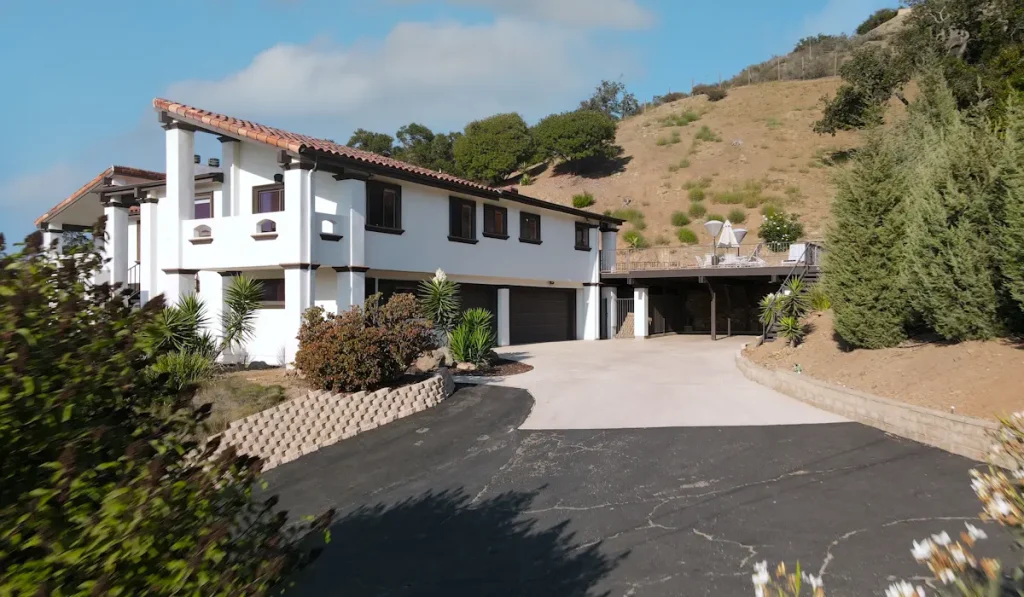
Aging asphalt driveway with surface cracks at a hillside home – how long an asphalt driveway lasts in Riverside, CA

How Long Does an Asphalt Driveway Last in Riverside?

How Long Does an Asphalt Driveway Last in Riverside? Your driveway is the one part of your property you use every single day and think about roughly never. Then one summer you notice it’s gone gray, there’s a crack running toward the garage, and the edge is crumbling where you always pull in. At that point most homeowners want one answer: is this thing done, or does it have years left? Usually it has more life in it than people assume, but only if the base underneath is still solid. That’s the whole ballgame with asphalt. What you can see on top is rarely the thing that decides how long it lasts. Here’s what a driveway should get you in Riverside, what pulls that number down, and how to tell where yours actually stands. Typical Asphalt Driveway Lifespan in Riverside A well built asphalt driveway lasts 15 to 20 years here with regular maintenance. Skip the maintenance and you’re realistically looking at 10 to 12 before it needs serious work. The spread depends almost entirely on care: How it’s maintained Realistic lifespan Sealed on schedule, cracks filled 18 to 20 plus years Sealed occasionally 13 to 17 years Never sealed, cracks left open 8 to 12 years Built on a poor base Under 10 regardless of care That last row is the one worth noticing. No amount of sealing rescues a driveway that was laid on ground that was never prepped. Why Riverside Driveways Age Faster Than the Averages Heat and UV exposure accelerate aging, while moisture entering those cracks can turn surface deterioration into structural damage. Then there’s the daily swing. Hot afternoons and cool nights expand and contract the surface constantly, and that cycling opens hairline cracks over time. By the time winter storms arrive, that brittle, cracked surface soaks water into the base instead of shedding it. The heat sets the problem up and the rain finishes it, which is why unsealed driveways here fall off the national averages so quickly. What Actually Determines How Long Yours Lasts Five things decide it, and only two of them are visible from your front yard. Most driveway failures trace back to a decision made before the asphalt ever went down. In rough order of importance: Base preparation. Compacted, properly graded base is the single biggest factor Drainage. Water that sits on or beside the driveway will get underneath it Thickness. Residential driveways commonly use roughly 2 to 3 inches of asphalt over a properly prepared aggregate base, with the base thickness adjusted for soil and expected loads Sealcoating. Blocks the UV and moisture that cause most surface aging Use. RVs, work trucks, and dumpsters put loads on it that a car doesn’t You control the last two. The first three were decided by whoever built it, which is why the install matters so much more than people expect. Signs Your Driveway Is Nearing the End Color and hairline cracks are normal aging. Movement is not. The difference between “needs maintenance” and “needs replacing” comes down to whether the surface is still supported underneath. Time for a closer look if you see: Cracks that have widened enough to fit a coin A web or grid pattern of connected cracks Sunken areas or spots that hold water after rain Edges crumbling away where cars pull on and off Potholes forming, especially in the same spot twice Water sitting anywhere on the surface a day after rain is the earliest useful warning you’ll get. Repair, Resurface, or Replace? The answer depends on whether the base is intact, not on how bad the surface looks. Plenty of ugly driveways only need a new top layer. Roughly how it breaks down: Repair when damage is isolated. Crack filling and patching, low cost, buys years Resurface when the surface is worn but the ground under it is stable. New asphalt over the existing base Replace when the base has failed, the driveway has sunken areas, or repairs keep coming back in the same places If you’re getting quotes and one contractor jumps straight to replacement without checking for soft spots, get a second opinion. Crews that do the base work properly will tell you when a resurface is enough, because they’d rather do a smaller job right than a bigger job you resent paying for. How Sealcoating Adds Years to a Driveway Sealcoating is the cheapest thing you can do for asphalt and the thing most homeowners skip. It puts a protective layer over the surface that blocks UV, keeps water out, and resists oil drips. For Riverside, a realistic schedule looks like this: When What 3 to 6 months after install First seal, once the asphalt has cured Every 2 to 3 years after Reseal, closer to 2 on full sun exposure Each fall Fill new cracks before winter storms Worth being clear: sealing doesn’t fix cracks and it doesn’t fix a bad base. It protects a driveway that’s still in good shape, which is exactly why timing matters more than frequency. What to Expect From a Brand New Driveway New asphalt needs time before it behaves like a finished surface. It’s usable quickly, but it stays soft for a while, and the first summer is when most avoidable damage happens. Reasonable guidelines: Wait 3 to 5 days before parking on it Keep heavy vehicles off for about 30 days Avoid turning your wheels while stopped, which scuffs the surface Put a board under motorcycle kickstands and jack stands in hot weather Don’t seal it until it’s cured, usually 3 to 6 months Tire marks on a new driveway in July are normal and they fade. Gouges from a kickstand do not. Got Questions? Frequently Asked Questions ? How often should I seal an asphalt driveway in Riverside? Every 2 to 3 years, and closer to 2 if it gets full sun all day. Our UV exposure shortens the interval compared to milder climates. ? Why does my driveway crack even though it

How Long Does an Asphalt Driveway Last in Riverside? Read More »

Sealcoating vs Resurfacing: Which Does Your Lot Need?

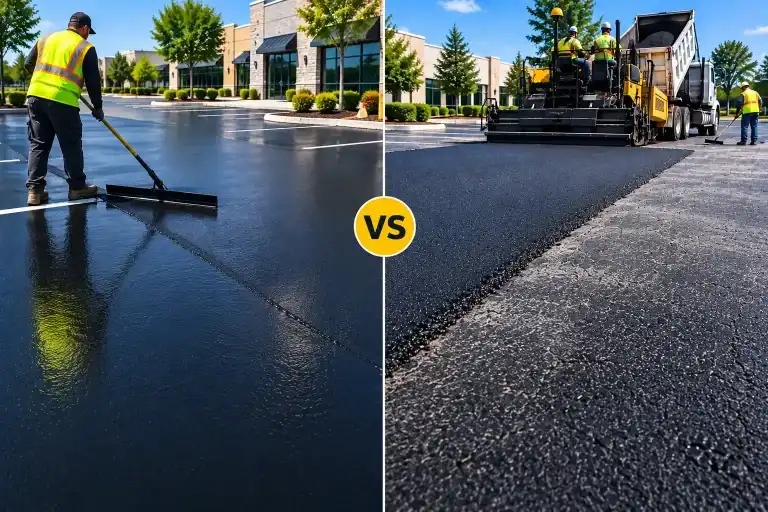
Sealcoating vs Resurfacing: Which Does Your Lot Need? September 20, 2026 Riverside, CA Sealcoating vs Resurfacing: Which Does Your Lot Need? Every property owner in Riverside eventually gets two very different quotes for what looks like the same problem. One contractor says seal it. The next one says it needs resurfacing. The prices aren’t close, and now you’re stuck guessing which one was being straight with you. Here’s the thing. They might both be right, depending on what’s actually happening under that surface. Sealcoating and resurfacing solve different problems. One protects asphalt that’s still structurally fine. The other replaces asphalt that isn’t. Picking wrong in either direction costs you money, either by paying for work you didn’t need or by paying twice for work that didn’t hold. This walks through the difference, how to tell which side your lot falls on, and the signs that mean neither option is going to help. What’s the Difference Between Sealcoating and Resurfacing? Sealcoating applies a protective coating over existing asphalt. Resurfacing, often called an asphalt overlay, adds a new asphalt surface over a prepared existing pavement, sometimes after milling the old surface. Sealcoating Resurfacing What it does Coats and protects the surface Replaces the top layer of asphalt Thickness added Roughly 1/8 inch Typically 1.5 to 2 inches Fixes cracks? No, only seals fine ones Yes, on a sound base Lasts 2 to 3 years 8 to 15 years Downtime A day or two Several days The short version: sealcoating buys time on good asphalt. Resurfacing gives you a new surface on a base that’s still doing its job. When Sealcoating Is the Right Call Sealcoat when the asphalt is structurally sound and you’re trying to keep it that way. If your lot drains properly, has no soft spots, and only shows fading with a few thin cracks, sealing is the smart, cheap move. Signs you’re in sealcoating territory: Surface looks gray or washed out instead of dark Cracks are hairline or narrow, and they’re isolated No standing water after rain Nothing feels soft or spongy when you drive over it The asphalt has cured sufficiently and has never been sealed One of the highest-value maintenance steps you can take for sound asphalt is regular sealcoating. It’s a small expense that pushes the big one out by years. When Resurfacing Is the Right Call Resurface when the surface is worn out but the base underneath is still solid. That’s the whole test. If what’s under the asphalt is stable, you don’t need to tear the lot out, you just need a new driving surface on top. You’re likely looking at resurfacing if: Cracking is widespread rather than isolated The surface is raveling, meaning loose aggregate is coming up Old patches and repairs have made the lot uneven Sealcoating has been done a few times and no longer holds The asphalt is 15 to 20 years old and looks its age Most Riverside commercial lots hit this point once. It’s a normal lifecycle event, not a sign anyone did anything wrong. When Neither One Is Going to Work If the base has failed, both options are a waste of money. Resurfacing over a bad base gives you a nice looking lot that cracks through in a season or two, and sealcoating over it does even less. The tell is alligator cracking, that web of interconnected cracks that breaks the asphalt into small pieces. It indicates structural fatigue, often associated with inadequate pavement thickness, weak supporting layers, moisture damage, or repeated heavy loading. When that shows up, the fix is a full-depth repair on those sections, or reconstruction if it’s spread across the lot. Any crew that offers to just seal over it is selling you a season. How Riverside’s Climate Changes the Timeline Asphalt here ages faster than the standard maintenance schedules assume, because UV does most of the damage before rain ever gets a chance. Triple digit summers dry out the binder that holds the surface together, and a lot can go brittle years before it looks worn. That has a practical effect on both options: Sealcoating intervals run shorter here, closer to 2 years than 3 on lots with heavy sun exposure Unsealed asphalt reaches the resurfacing conversation noticeably early The window to seal before winter storms arrive is roughly now through October A lot that’s never been sealed in Riverside is usually further along than the same lot would be in a milder climate. What Each Option Costs You Over Ten Years The cheapest path over a decade is almost always consistent sealcoating, not skipping it. Sealing is a small recurring expense. Resurfacing is a large one-time expense, and reconstruction is a much larger one. Rough picture for a typical commercial lot: Approach What you spend over 10 years Seal every 2 to 3 years Several small maintenance costs Skip sealing, resurface at year 8 One large repair cost Skip everything, rebuild the base The largest cost of the three Deferring maintenance doesn’t save money, it just moves the bill and adds interest. That’s the part that catches property managers off guard when a budget cycle comes around. How to Stay in Sealcoating Territory Keeping a lot in the cheap category comes down to water and timing. Seal on schedule, and don’t let cracks stay open through a rainy season. A workable rhythm: Walk the lot after the first real rain each winter and note where water sits Fill new cracks before storm season, not after Keep drains and gutter lines clear of debris Seal every 2 to 3 years depending on sun and traffic Get eyes on any soft spot early instead of watching it another year The crew we send out handles both sealcoating and resurfacing, which honestly matters here, because a company that only sells one of them tends to find that one everywhere they look. Frequently Asked Questions Can you sealcoat a parking lot that’s already cracked? Fine hairline cracks, yes. Wide cracks need filling first,

Sealcoating vs Resurfacing: Which Does Your Lot Need? Read More »

How Thick Should a Commercial Parking Lot Be in Riverside?

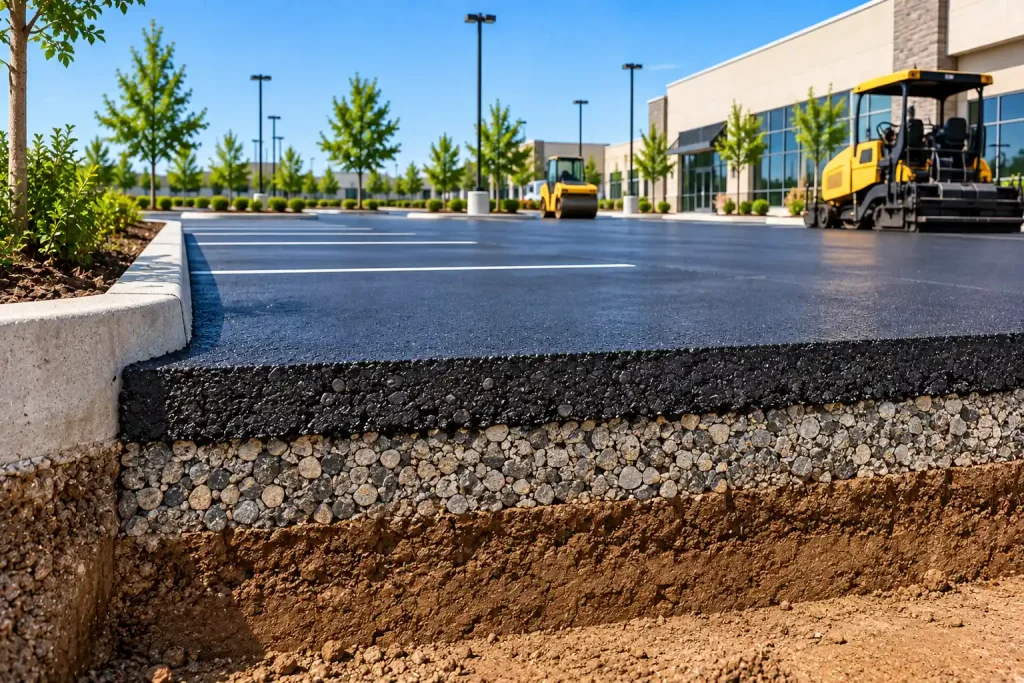
How Thick Should a Commercial Parking Lot Be in Riverside? September 20, 2026 Riverside, CA How Thick Should a Commercial Parking Lot Be in Riverside? When you get three bids on a parking lot and one comes in noticeably cheaper, thickness is usually where the difference lives. Not in the crew, not in the equipment. In the inch or two of material nobody sees once the job is done. That’s an uncomfortable thing about paving. The part that determines whether your lot lasts 8 years or 20 is invisible the moment it’s finished. You can’t inspect it later without cutting into it. So it’s worth knowing the numbers before you sign anything. This covers what thickness a commercial lot actually needs, why the base matters more than the asphalt on top, and how to spot a lot that was built light. How Thick Should a Commercial Parking Lot Be? There isn’t one correct thickness for every commercial parking lot. A common starting range is about 3 to 4 inches of asphalt over 6 to 8 inches of compacted aggregate base, but the final section depends on traffic, soil strength, drainage, and site conditions.  Here’s the standard breakdown: Lot type Asphalt Aggregate base Passenger cars only 2 to 3 inches 4 to 6 inches Mixed use with occasional delivery 3 to 4 inches 6 to 8 inches Regular truck and loading traffic 4 to 6 inches 8 to 12 inches Industrial and heavy equipment 6 inches or more 12 inches or more These are typical ranges, not a substitute for a spec. Larger projects get engineered based on a soils report and expected traffic counts. Why the Base Matters More Than the Asphalt The asphalt and aggregate base work together to carry and distribute traffic loads. The base provides important structural support and helps spread those loads into the subgrade. Think of it the way you’d think about a house. The asphalt is the roof and the base is the foundation. A thicker roof doesn’t help you if the foundation is undersized. When bids differ significantly, compare the asphalt thickness, base depth, subgrade preparation, drainage work, and other specifications line by line. A lower price can reflect a thinner pavement section or simply a different scope.  Does Compaction Matter More Than Thickness? In a lot of cases, yes. An improperly compacted eight-inch base can perform worse than a properly compacted thinner section. Thickness matters, but so does density and uniform support.  Proper compaction means the base goes down in lifts, usually 3 to 4 inches at a time, with each layer compacted before the next one goes on. Dumping the full depth at once and rolling the top leaves everything below it soft. The same applies to the subgrade, the native soil underneath everything. If that wasn’t prepped and compacted first, the layers above it are sitting on something that moves. What Riverside Soil and Climate Add to the Equation Riverside has varying soil conditions, and pavement design needs to account for the strength and moisture behavior of the site-specific subgrade. Where soils are weak or moisture-sensitive, stabilization or additional aggregate may be needed.  Two local factors that affect the spec: Soil type. Clay-heavy subgrade often needs extra base depth or stabilization to hold up. Sandier areas are more forgiving. Thermal cycling. Triple digit summers and cool nights expand and contract asphalt daily, which fatigues thin sections faster than thick ones. A lot built to minimum spec in a mild climate on stable soil will outlast the same lot here. Building to the low end of the range in Riverside is usually a false economy. Signs Your Lot Was Built Too Thin Underbuilt pavement shows itself early, usually within the first 5 to 7 years instead of the 15 to 20 you paid for. The damage concentrates where the load is heaviest rather than spreading evenly. Look for: Cracking that appears first in drive aisles and entrances Rutting or depressions in the paths trucks follow Soft or flexing areas under a vehicle’s weight Alligator cracking on a lot that isn’t very old Repairs that keep failing in the same spots Age is the tell. Widespread cracking on a lot under a decade old usually points to how it was built, not to how it was maintained. Can You Fix a Lot That Was Built Too Thin? Yes, but the fix depends on how far along it is. If the base is still intact and only the surface has fatigued, an overlay can add structural thickness without a full rebuild. The options, roughly in order: Overlay. Adds asphalt depth on a sound base, improving load capacity Mill and overlay. Removes the failed surface first so grade and drainage get corrected Full-depth repair. Rebuilds the base in the specific areas that have failed Reconstruction. Starts over when the base has failed across most of the lot If you don’t know what’s under your lot, a paving contractor in Riverside, CAn core it and measure the actual layers. It takes an hour and it tells you exactly which of those four you’re looking at. How to Protect a Lot That’s Already Underbuilt If your lot was built light and you’re not ready to rebuild it, the goal is keeping water out and load off. Thin pavement fails fastest when those two work together. Practical steps: Reroute delivery trucks off the weakest sections where you can Fill cracks before winter storms so water stays out of the base Keep drains clear so nothing pools on the surface Seal on a tighter schedule, closer to every 2 years Repair soft spots individually before they connect into larger areas None of this adds structural capacity. It buys years, which is often exactly what you need while a capital budget catches up. Frequently Asked Questions Is 2 inches of asphalt enough for a commercial lot? Only for light passenger car traffic on a well built base. Anything with delivery trucks needs 3 inches minimum, usually more. How

How Thick Should a Commercial Parking Lot Be in Riverside? Read More »

How Often Should Commercial Parking Lots Be Sealcoated?

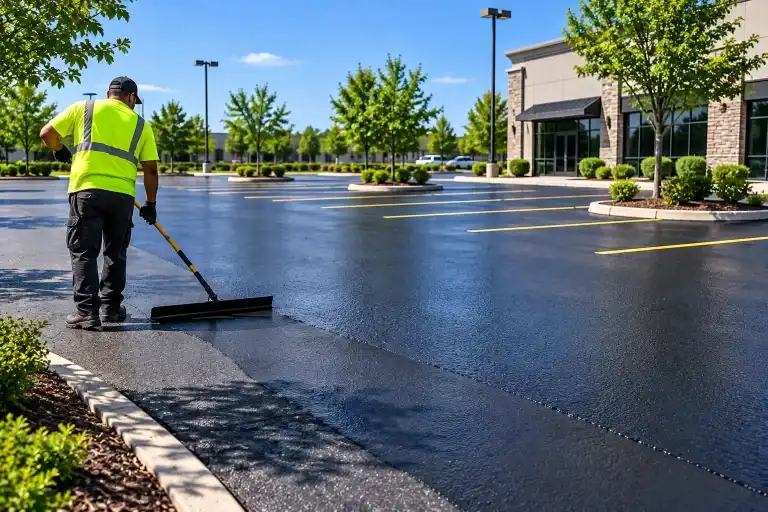
How Often Should Commercial Parking Lots Be Sealcoated? September 20, 2026 Orange County, CA How Often Should Commercial Parking Lots Be Sealcoated? Sealcoating is one of those things that’s easy to put off. The lot still looks fine, business is busy, and there’s always something else competing for the budget. Then a few years go by, cracks start showing up everywhere at once, and suddenly what would’ve been a simple maintenance job turns into a real repair bill. We get asked about timing a lot, usually by property managers juggling more than one location around Orange County. This piece covers how often sealcoating actually needs to happen, what changes that timeline, and what it costs you to wait too long. If your lot’s overdue, our sealcoating services page is a good next stop once you’ve got a sense of where your property stands. So How Often Should a Commercial Lot Actually Be Sealcoated? Most commercial lots need sealcoating every two to three years, though busier properties can need it closer to every eighteen months. That range isn’t arbitrary. It’s roughly how long the seal itself holds up against sun exposure, water, and daily traffic before it starts wearing thin. A lot that sees constant delivery trucks and heavy foot traffic simply burns through that protection faster than a quiet office park with light use. What Happens If You Wait Too Long Between Sealcoats? Waiting too long lets sun and water start breaking down the asphalt underneath instead of just the protective layer on top. Once that happens, you’re not looking at a simple recoat anymore. You’re looking at cracks that need sealing first, maybe some patching, and a bigger bill than if the sealcoat had gone on when it was supposed to. It’s the classic case of a cheap job now turning into an expensive one later. Does Traffic Volume Actually Change the Timeline? Yes, and it’s probably the single biggest factor in how often a specific lot needs attention. A retail center with constant customer traffic and delivery trucks wears through sealcoating faster than a lot that mostly sees employee parking during business hours. Loading docks and entrances tend to need attention more often than the rest of the lot too, since that’s where the wear concentrates. What’s Actually Involved in a Sealcoating Job? A sealcoating job starts with cleaning the surface, then filling any cracks, and finally applying the protective coating itself, usually in one or two coats depending on the lot’s condition. It’s a lot less involved than resurfacing or replacement since nothing structural is being touched, just protected. Most commercial jobs can be done in a day or two depending on lot size, which is part of why it’s such a manageable maintenance item compared to bigger repairs. Does Orange County Weather Affect When You Should Sealcoat? It does, mostly around picking the right window rather than changing how often you need it. Sealcoating needs warm, dry conditions to cure properly, which this area has plenty of for most of the year. Late spring through early fall tends to be the easiest stretch to schedule, while the occasional heavy winter rain is really the only thing that can push a project back a bit. What Are the Signs a Lot Is Overdue for Sealcoating? Fading color, a rough or dry looking surface, and small cracks starting to show up across the lot are all signs it’s time. The asphalt doesn’t have to look bad yet for it to be due. In fact, catching it while it still looks decent is exactly the point, since sealcoating is meant to protect a healthy surface, not fix a damaged one. How Does Sealcoating Fit Into Long Term Pavement Care? Sealcoating is really the cheapest, easiest thing you can do to stretch the life of a parking lot by years. Lots that get coated on a consistent schedule tend to go much longer between needing a full resurface or replacement, since the base and surface underneath stay protected from the elements the whole time. It’s the kind of maintenance that pays for itself by avoiding a much bigger expense down the road. Is Sealcoating Worth It Compared to Just Waiting for Repairs? Almost always, yes, since sealcoating costs a fraction of what patching and repairing a neglected lot ends up costing over time. Waiting for problems to show up before doing anything means you’re always playing catch up, and usually paying more for it. A little bit of maintenance on a schedule beats a big repair bill every time. Not Sure Where Your Lot Stands? If it’s been a while since your lot was sealcoated, or you’re not sure when it was last done, that’s a pretty easy thing to figure out with a quick look. Our paving contractor team can take a look at your property, tell you honestly where it stands, and get it scheduled before small wear turns into a bigger repair. Frequently Asked Questions How long does a sealcoating job typically last? Most sealcoats hold up two to three years, though heavier traffic can shorten that closer to eighteen months in some cases. Can sealcoating fix existing cracks in a parking lot? Not on its own. Cracks need to be sealed first, then sealcoating goes on top to protect the surface going forward. Is sealcoating necessary if my lot looks fine? Yes, sealcoating protects a healthy surface before damage shows up, which is exactly why timing matters more than how it currently looks. How long does a commercial lot need to stay closed during sealcoating? Usually just a day or two, and lots can often be done in sections to keep part of the property open the whole time. Does sealcoating really extend the life of a parking lot? Yes, significantly. Lots kept on a regular sealcoating schedule generally go years longer before needing a resurface or full replacement. Wondering How Much Life Your Pavement Has Left? Call Now: (951) 900-3806 Most surfaces give you

How Often Should Commercial Parking Lots Be Sealcoated? Read More »

What Is the Difference Between Asphalt Repair, Resurfacing, and Replacement?

What Is the Difference Between Asphalt Repair, Resurfacing, and Replacement? September 20, 2026 Orange County, CA Difference Between Asphalt Repair, Resurfacing, and Replacement Somebody calls us almost every week asking the same thing, more or less. Their lot has some cracks, maybe a pothole or two, and they want to know if they need a quick fix or something bigger. It’s a fair question, and honestly the answer depends on stuff most people never think to check, like what’s actually happening under the surface, not just what they can see standing on top of it. Repair, resurfacing, and replacement aren’t interchangeable words for the same job. They’re three different levels of work, and picking the wrong one usually means paying for it again sooner than you should. This piece walks through what each one actually involves and how to tell which your property needs. If you’re already at the point of wanting a real assessment, our paving contractor guide explains what each option involves and when each one makes the most sense. . So What’s Actually the Difference Between These Three? Repair fixes a specific problem area, resurfacing rebuilds the top layer over a base that’s still solid, and replacement tears everything out and starts fresh. Repair is the smallest, cheapest, most targeted option. Resurfacing sits in the middle, giving you a fresh surface without touching what’s underneath. Replacement is the full reset, used when the base itself has given out and there’s nothing left to build on top of. When Does Repair Actually Make Sense? Repair’s the right call when you’re dealing with one specific problem, not the whole lot. A single pothole, a patch of alligator cracking near the entrance, that one spot by the drain that just won’t hold. If everything else around it looks fine, you’re patching a weak spot, not managing a failing lot. Where it stops making sense is when you’re patching the same general area every year or two. At that point you’re not really fixing anything, you’re just buying a few months before it cracks again somewhere close by. What Does Resurfacing Actually Involve? Resurfacing (most people in the industry call it mill and overlay) is exactly what it sounds like. Crews grind off the beat up top layer and lay a fresh one down over a base that’s still doing its job. It’s usually the right move for a lot that looks tired everywhere, not falling apart in one spot, but tired all over, while the ground underneath is still solid. End result is a surface that looks and drives like brand new, minus the price tag and the week long shutdown that comes with tearing the whole thing out. When Is Full Replacement the Only Real Option? Replacement becomes necessary once the base has failed, not just the surface. Signs like deep alligator cracking, potholes that keep coming back no matter how many times they’re patched, or standing water that never drains all point to a base problem that resurfacing can’t fix. At that point, paving over it just buys a little time before the same issues come right back through the new surface. How Much Does Each Option Typically Run? Repair is the cheapest by a wide margin since it’s targeting a small area rather than the whole property. Resurfacing costs more than repair but noticeably less than a full replacement, since the base work, the most expensive part of any paving job, is already done. Replacement carries the highest upfront cost, but it’s also the option that resets the clock completely instead of working around an aging foundation. Does Orange County Weather Change Which Option Makes Sense? It can, mostly around timing rather than which option itself is right. Dry, warm weather cures asphalt faster, which is the norm here for most of the year, so resurfacing and replacement projects tend to move quickly. The exception is after a heavy winter rain, which sometimes reveals base problems that were hiding under a surface that looked fine a month earlier. A lot that seemed like a repair candidate in October can turn into a resurfacing or even replacement conversation after a wet January. How Do You Get More Life Out of a Repair or Resurfacing Job? Seal coating every couple of years and sealing new cracks as soon as they show up is what keeps a repaired or resurfaced lot from needing attention again too soon. Water is one of the biggest causes of pavement deterioration because it weakens the supporting base over time. Staying ahead of drainage issues, rather than letting water pool in the same spot repeatedly, also protects whatever work was just done. How Do You Know Which One Your Property Actually Needs? Honestly, the surface alone won’t tell you. A crack can look minor and still be sitting on top of a base that’s already failed, or it can look worse than it is and be an easy patch. This is really why a walk through with someone who knows what to look for underneath matters more than guessing from a few photos. It’s usually the difference between spending the right amount once and spending money twice on the same problem. Not Sure Which One Fits Your Situation? That’s honestly the most common starting point for people who reach out to us. You don’t need to already know the answer before calling. Tell us what you’re seeing, we’ll take a look, and we’ll tell you straight whether you’re looking at a repair, a resurfacing job, or something bigger. Our paving team handles all three, and we’d rather steer you toward the smaller job when that’s genuinely what fixes the problem. Frequently Asked Questions Is resurfacing cheaper than full replacement? Yes, usually significantly. Resurfacing skips the base work, which is the most expensive part of a full replacement project. Can a lot be repaired more than once before it needs resurfacing? It can, but repeated repairs in the same area usually mean resurfacing or replacement

What Is the Difference Between Asphalt Repair, Resurfacing, and Replacement? Read More »

How Long Does Asphalt Last in Riverside, CA?

How Long Does Asphalt Last in Riverside, CA? September 14, 2026 Riverside, CA How Long Does Asphalt Last in Riverside, CA? Pavement is one of those things you stop noticing after the first year or so. It’s just there. Then one August morning you’re backing out and you spot a crack you’re fairly sure wasn’t there in June. Riverside is rough on asphalt. Anyone who’s sat through a summer here knows the heat doesn’t really let up, and that heat goes to work on your pavement all day, every day, for months on end. Then a winter storm shows up out of nowhere and soaks everything that’s already opened up. So how many years should you expect? Depends on more than the asphalt itself, honestly. What follows is a straight rundown of what we tend to see across Riverside driveways and lots, what shortens the clock, and what usually buys you more time. How Long Does Asphalt Last in Riverside? Most asphalt that’s been built properly around here holds up somewhere in the 15 to 20 year range, assuming it gets a bit of maintenance along the way. Let it go entirely and problems tend to show up closer to year eight or ten. Rough expectations we see locally: Residential driveways: often 15 to 20 years Commercial lots: usually a bit less, especially with truck traffic Overlays laid on an older base: frequently under 12 years Here’s what catches people off guard. The asphalt isn’t really the deciding factor. The base under it is. Compaction, grading, drainage. Get that part right and the surface ages slowly. Get it wrong and good asphalt won’t save you, which is why prep work matters so much on any driveway paving job. Why Riverside Heat Is So Hard on Pavement Sun does most of the damage. UV exposure accelerates oxidation in the binder, making the asphalt harder and more brittle over time. Over time, you’ll notice the color drifting from black toward a chalky gray. After that it gets brittle. Sweep it and you’ll find loose gravel coming up along the edges. Small stuff, but it’s the surface telling you something. Then the rain arrives. Water slips into the hairline cracks the heat already made, sits in the base, and softens what’s holding your surface up. Heat opens the door. Water walks through it. Why Cracks Turn Into Potholes Water is often the trigger. Traffic then puts repeated loads on the weakened area and helps turn a small failure into a pothole. The pattern usually goes like this: Sun dries the surface and thin cracks appear Rain runs into those cracks instead of off the pavement The base underneath softens and loses its compaction Cracking spreads out into that alligator pattern A vehicle rolls over the weak spot and it caves None of it happens overnight. Which is frustrating, sure, but it also means there’s usually a long window to catch it while it’s still cheap. Signs Your Pavement Is Aging Faster Than It Should A few things are worth watching for. Spot any of these and your surface is probably running ahead of schedule, in the wrong direction. Color has faded from black to a washed out gray Cracks you can fit a coin into Water sitting on the surface a day after a storm Loose aggregate gathering along edges and corners Faded striping and crumbling edges on a commercial lot Standing water is the one we’d take most seriously. It usually points back to grading, and grading issues don’t sort themselves out. On a busy commercial property that can mean looking at a larger parking lot project rather than another patch. Does Sealcoating Really Add Years? Yes, when the pavement is still structurally sound. Sealcoating helps protect the surface from UV exposure and moisture while slowing oxidation. It won’t repair structural damage underneath. If the base has already gone soft, sealcoating won’t solve the structural problem underneath. So think of sealcoating work as maintenance, not repair. Timing matters more than most people assume. Sealing a driveway that’s already cracking through is money you probably won’t get back. Resurface or Replace: How to Tell Generally speaking, if the damage sits in the top layer and the base still feels solid, resurfacing does the job. When cracking has spread across large areas or potholes keep reopening in the same spot, you’re likely looking at a full replacement. A quick way to read it: Surface cracks and fading, base still firm, usually an overlay Widespread alligator cracking, usually mill and replace Same pothole coming back twice, that’s a base problem One thing that gets skipped a lot. Paving straight over a failing surface tends to push the problem upward instead of solving it, which is why milling the old layer off belongs in an honest replacement quote. A Maintenance Routine That Works Around Here Keep water out, keep the surface protected. That’s really it. Not complicated, just easy to forget. What we’d suggest for most Riverside properties: Fill new cracks before winter rain shows up Sealcoat every two to three years, depending on sun exposure Keep drains and gutter lines clear of debris Patch potholes early rather than watching them spread Restripe when the lines start disappearing That last one gets pushed off constantly. Faded lines on a commercial lot are a liability issue though, and most owners end up scheduling striping work alongside sealcoating anyway. Why Riverside Conditions Matter When Asphalt Is Installed  Contractors who work in this valley week after week build for this climate instead of a generic spec sheet. Mix, thickness, how water gets off the surface. All of that shifts when you know the pavement is going to bake for months. Soil isn’t consistent across the city either. The older neighborhoods around Downtown and Magnolia Center don’t behave the same as newer developments out toward Orangecrest. That kind of read comes from years of showing up, not from a manual. Worth asking any asphalt contractor in Riverside how they

How Long Does Asphalt Last in Riverside, CA? Read More »

What Causes Alligator Cracking in Parking Lots?

What Causes Alligator Cracking in Parking Lots? September 13, 2026 Riverside, CA Causes of Alligator Cracking in Parking Lots You’ve probably walked past it a hundred times without knowing it had a name. That section of your lot where the cracks connect into little interlocking squares, usually right where trucks turn in or where a puddle always sits. That pattern is alligator cracking, and it’s the one type of asphalt damage we tell Riverside property owners not to sit on. Regular cracks are a surface issue. Alligator cracking is different. By the time you can see it, the problem is already underneath the asphalt, in the base layer that’s supposed to be holding everything up. The good news is that it usually starts in one or two spots, not across a whole lot. Catch it there and you’re looking at a patch. Wait a couple of years and you’re looking at a much bigger number. Here’s what actually causes it and what to do about it. What Is Alligator Cracking, Exactly? Alligator cracking is a web of connected cracks that breaks the asphalt into small, irregular pieces, similar to reptile skin. It’s also called fatigue cracking, which is honestly the more useful name. The distinction that matters: Regular cracking runs in lines. It’s the surface shrinking, drying out, or moving. Alligator cracking forms a grid or web. It’s the pavement flexing because nothing solid is supporting it. When alligator cracking appears, the pavement is showing signs of structural distress rather than simple surface aging. What Causes Alligator Cracking in Asphalt Parking Lots? Alligator cracking is a form of structural fatigue. It develops when repeated traffic loads exceed the pavement’s ability to carry them, often because the asphalt, base, or subgrade has become too weak. Water can make the problem much worse by weakening the supporting layers. Here’s how it plays out: Water enters through cracks, joints, or bad edges It settles into the base instead of draining away The saturated base softens and shifts Traffic flexes the unsupported asphalt above it The asphalt fatigues and breaks into the web pattern A few other things can cause it or speed it up: Asphalt laid too thin for the traffic the lot actually gets A base that was never compacted properly during the original install Poor grading, so water pools in the same spot after every rain Paving directly over a failing surface instead of milling first That last one is common on lots that got a cheap “refresh” a few years back. Why Heavy Vehicles Make It Worse Weight is what turns a weak base into visible cracking. That’s why alligator cracking almost never shows up in the middle of empty parking stalls. It shows up in the paths vehicles actually use. Check these areas on your own property: Entrances and exits where vehicles turn under load Delivery and loading areas Drive aisles and dumpster approaches Anywhere a truck routinely parks in the same spot A lot designed for passenger cars that now takes daily box truck deliveries is a textbook case. The base was never built for that load, and it eventually says so. Why Riverside Lots Show It Faster Than You’d Expect Our climate sets pavement up for this. Long stretches of triple digit heat dry out the binder holding the asphalt together, and the surface goes brittle and porous well before it looks worn out. Then a few winter storms arrive. All that rain hits a surface full of hairline cracks and soaks straight into the base instead of running off toward the storm drain. Add expansive soils in parts of the city that swell when wet and shrink as they dry, and you get movement underneath the pavement year after year. Lots near Market Street, University Avenue, and the older commercial corridors show it first, because the base under them has been through a lot more of those cycles. Can You Sealcoat or Fill Over Alligator Cracking? No, and this is the mistake we get called out to fix most often. Sealcoating and crack filler are surface treatments, and alligator cracking is not a surface problem. Seal over it and you’ll get a lot that looks great for a season. Underneath, the base is still wet and still moving, so the pattern comes right back through, usually worse. Sealcoating is genuinely worth doing on healthy asphalt. It just isn’t a repair. Using it as one buys you a few months and costs you the money you’ll spend again doing it right. How Alligator Cracking Actually Gets Repaired Real repair means removing the failed asphalt and fixing the base underneath it. That’s called a full-depth patch, and it’s the only approach that lasts. What a proper repair involves: Saw cutting a clean edge around the damaged area Removing the asphalt and the wet, contaminated base below Bringing in fresh aggregate and compacting it in lifts Laying new asphalt at full thickness and compacting it Correcting the grade so water drains away from the patch If the cracking has spread across most of the lot, patching stops making financial sense and reconstruction becomes the better call. An honest Riverside paving crew will tell you which side of that line you’re on instead of defaulting to the bigger job. How to Keep It From Coming Back Prevention comes down to two things: keep water out, and don’t overload pavement that wasn’t built for it. Everything else is a variation on those. What to do How often Walk the lot after rain and note standing water Twice a year Fill new cracks before winter storms Yearly Clear debris from drains and gutter lines Monthly Reseal healthy asphalt Every 2 to 3 years Reroute heavy delivery traffic off weak areas As needed The single highest-value habit is the after-rain walk. Water sitting in the same spot every time is your lot telling you where the next alligator patch is going to appear. Frequently Asked Questions Is alligator cracking serious?  Yes. It

What Causes Alligator Cracking in Parking Lots? Read More »

How Drainage Affects Asphalt in Riverside, CA

How Drainage Affects Asphalt in Riverside, CA September 13, 2026 Riverside, CA How Drainage Affects Asphalt in Riverside, CA Most property owners here blame the sun when their pavement starts falling apart. The heat is part of it, but water is usually what finishes the job. Riverside goes months without rain, then a few winter storms roll through and dump everything at once. If your driveway or lot isn’t graded to push that water toward the storm drain, it sits on the surface and works its way down through every hairline crack it can find. That’s when the expensive damage starts. Water softens the base underneath, the asphalt loses its support, and what was a small puddle turns into a sunken area, then a pothole. This guide covers how drainage affects asphalt in Riverside, the warning signs on your own property, and what actually fixes it. Some of it is cheap prevention. Some of it means going after the base. Either way, catching it early costs a fraction of catching it late. How Does Drainage Affect Asphalt Pavement? Poor drainage shortens asphalt life by weakening the base layer underneath the surface. Asphalt is only as strong as what’s beneath it, and that base is compacted rock and soil that loses its strength once it gets saturated. Here’s the sequence we see on almost every failed lot in Riverside: Water pools instead of flowing off the surface It seeps through small cracks and joints The saturated base softens and shifts under weight The unsupported asphalt cracks, sinks, and breaks apart The surface gets blamed, but the failure started below it. Why Water Pools on Riverside Driveways and Parking Lots Standing water almost always comes down to grade. Many paved surfaces are designed with roughly 1% to 2% cross slope, but the appropriate grade depends on the site and drainage design. When that slope is missing, it usually traces back to one of these: The original job was laid flat over an existing surface with no re-grading The base was never compacted evenly, so it settled in low spots Landscaping, curbs, or an added addition changed where water travels The lot drains toward a storm drain that sits higher than it should Any lot with a birdbath that lingers for a day after rain has a grading problem, not a surface problem. Why Riverside’s Climate Makes Drainage Problems Worse Our climate is harder on asphalt than a wet climate is, because pavement here takes damage from both directions. Triple digit summers and intense UV exposure accelerate oxidation, making asphalt binder harder and less flexible over time. Then the winter storms arrive. That brittle, already-cracked surface soaks up water like a sponge instead of shedding it. Add in expansive clay soils in parts of the city that swell when wet and shrink when dry, and you get movement under the pavement that a lot of out-of-area contractors don’t plan for. It’s one of the reasons local knowledge matters when you’re choosing a Riverside asphalt contractor. Warning Signs Your Asphalt Has a Drainage Problem The clearest sign is water that’s still sitting on your pavement more than 24 hours after rain. But drainage failures show up long before you’d call them potholes. Watch for: Puddles or damp rings that stay in the same spot every time Cracking in a web or grid pattern, often called alligator cracking Soft or spongy areas that flex when a vehicle drives over them Sunken spots near drains, curbs, or the edge of the pavement Stains, silt, or gravel washing across the surface after storms Alligator cracking is the one to take seriously. It usually indicates structural distress and can point to inadequate support beneath the asphalt. What Poor Drainage Actually Costs You Ignoring drainage turns a maintenance expense into a reconstruction expense. Sealing and patching a healthy surface is a small line item. Rebuilding a saturated base is not. There’s a liability side too, especially on commercial property: Standing water becomes a slip hazard and an ADA problem near accessible routes Potholes lead to vehicle damage claims from tenants and customers Faded parking lot striping and pooling water together make a property look neglected Water that runs the wrong way can end up in a building instead of the storm drain Most of our full-depth repair calls started as a puddle someone drove around for two years. How Grading and Base Prep Prevent Water Damage The fix for drainage starts before any asphalt gets laid, during grading and base compaction. A properly built surface directs water where you want it, so nothing has time to soak in. On a new install or a full replacement, that means: Removing the failed surface and any contaminated base material Shaping the subgrade to a deliberate slope toward drains or daylight Compacting the aggregate base in lifts, not all at once Laying asphalt at the right thickness for the traffic it carries Sealing edges and joints where water likes to enter This is exactly why we don’t pave over a bad surface. It’s also why asphalt milling exists as a step instead of an upsell. Drainage Maintenance That Extends Pavement Life The best long-term protection is keeping water moving and keeping the surface sealed. Both are cheap compared to what happens when you skip them. A realistic Riverside maintenance rhythm looks like this: Timing What to do Monthly Clear leaves and debris from drains and gutter lines Twice a year Walk the property after rain and note where water sits Yearly Fill new cracks before winter storms arrive Every 2 to 3 years Reseal the surface to block UV and moisture Sealcoating doesn’t fix a grading problem, but it does stop water from soaking through the surface while you address one. Can Drainage Be Fixed on Existing Pavement? Yes, in most cases you can correct drainage without tearing out the entire lot. The right approach depends on whether the base is still solid. Common repairs, from lightest to heaviest: Crack sealing:

How Drainage Affects Asphalt in Riverside, CA Read More »

What Causes Potholes in Riverside, CA?

What Causes Potholes in Riverside, CA? September 13, 2026 Riverside, CA Potholes get treated like they appear overnight. You probably notice a pothole the same way everyone else does. By hitting it. That thud coming through the steering wheel on your way out of a shopping center, or the one in your own driveway you’ve started steering around without thinking about it. Potholes get treated like they appear overnight. They don’t. By the time one opens up, something’s been going wrong under that pavement for a while, sometimes a couple of years. What follows is how they actually form around Riverside, why the same one keeps showing back up after it’s been filled, and what tends to stop the cycle. Some of this is fixable in an afternoon. Some of it isn’t, and it’s worth knowing the difference before you spend money on it. What Actually Causes a Pothole? Water and weakened support below the surface are usually the starting point. Traffic then turns that weakness into a pothole. The asphalt isn’t really failing on its own. It’s collapsing because whatever was holding it up stopped doing that job. Which is why potholes cluster in specific spots instead of appearing evenly. Wherever water gets in and lingers, that’s where you’ll find them. Everywhere else on the same lot can be perfectly fine. Why They Show Up After Riverside Storms Our rain arrives in bursts rather than steadily, and that’s harder on pavement than it sounds. Months of dry heat open the surface up, then several inches of water arrive over a couple of days with nowhere good to go. Everything that opened during summer becomes an entry point. Water runs in, saturates the base, and the supporting material loses strength and becomes less able to carry traffic loads. Then traffic does the rest. A delivery truck rolls over a softened section, the surface flexes further than it should, and within a few weeks there’s a hole. A pothole that appears after winter rain may have started with cracks that opened months earlier. More on that seasonal cycle in our breakdown of how long asphalt usually lasts around here. Why Parking Lots Get Them Faster Than Driveways Weight and repetition. A commercial lot takes delivery trucks, dumpster pickups, and hundreds of vehicles turning in the same places every day, while a driveway sees a couple of cars. Turning is the underrated part. Wheels twisting against pavement grind at the surface far more than driving straight across it does, which is why potholes so often appear near entrances, loading areas, and dumpster pads. Drainage tends to be worse on large lots too. More surface area means more water heading somewhere, and if the grade isn’t right it collects instead of leaving. Does a Pothole Mean a Bigger Problem Underneath? Usually, yes. A pothole is generally the visible end of a base problem, not a surface one, which is why it matters what the pavement around it looks like. A few things worth checking: Is the surrounding asphalt broken into small interconnected pieces Does water sit nearby after it rains Have other holes formed within a few feet of it Has this same spot been filled before If several of those apply, the issue is under the pavement, not on it. That pattern usually shows up as alligator cracking first, which we covered in what different crack patterns are telling you. Why Filled Potholes Keep Coming Back Because filling treats the hole, not the reason it formed. Throw cold patch into a pothole sitting over a soft base and you’ve got maybe a season before it opens again. Temporary patching has its place. If you need a lot safe by Friday, that’s a legitimate reason to do it. A repair that holds usually means cutting out the damaged section, addressing whatever’s wrong beneath it, and rebuilding properly. When holes have spread across a wide area, that conversation often shifts toward milling and repaving the surface instead of chasing individual spots. What Potholes Cost a Business Owner More than the repair, typically. A pothole in a customer lot creates a genuine liability exposure, and vehicle damage claims are not rare. There’s a perception cost too. Customers read a broken lot as a business that isn’t paying attention, whether that’s fair or not. And the repair itself only gets more expensive. A hole that could’ve been handled as a small section becomes a full corner of the lot if it sits through another rainy season. How to Keep Them From Forming Keep water out of the base. That’s genuinely most of it, and it’s cheaper than any repair you’ll do afterward. What we’d suggest for Riverside properties: Seal cracks before winter, not after Sealcoat the surface every couple of years to slow new openings Correct any area where water pools rather than drains Clear debris out of drains and gutter lines Handle small holes early instead of waiting for a group of them Protecting the surface is the piece most owners skip, and it’s the cheapest line item on the list. Regular sealcoating won’t fix a failed base, but it stops a lot of them from failing in the first place. Frequently Asked Questions Can I fill a pothole myself? For a small one, yes. Store bought cold patch works as a temporary fix, though our summer heat tends to break it down within a season or two. Why does the same pothole keep coming back? The base under it was never repaired. Filling only replaces the surface material, so the weak spot underneath keeps collapsing again. How quickly do potholes get worse in Riverside? Faster after rain. Once water reaches the base, a small hole can widen noticeably within weeks under regular traffic. Is a pothole covered by property insurance? Usually not as maintenance. Damage claims from customers may be, but ordinary pavement deterioration is generally treated as an owner responsibility. When is patching not worth it anymore? Once holes appear in several

What Causes Potholes in Riverside, CA? Read More »