
What Is the Difference Between Asphalt Repair, Resurfacing, and Replacement?
- September 20, 2026
- Orange County, CA
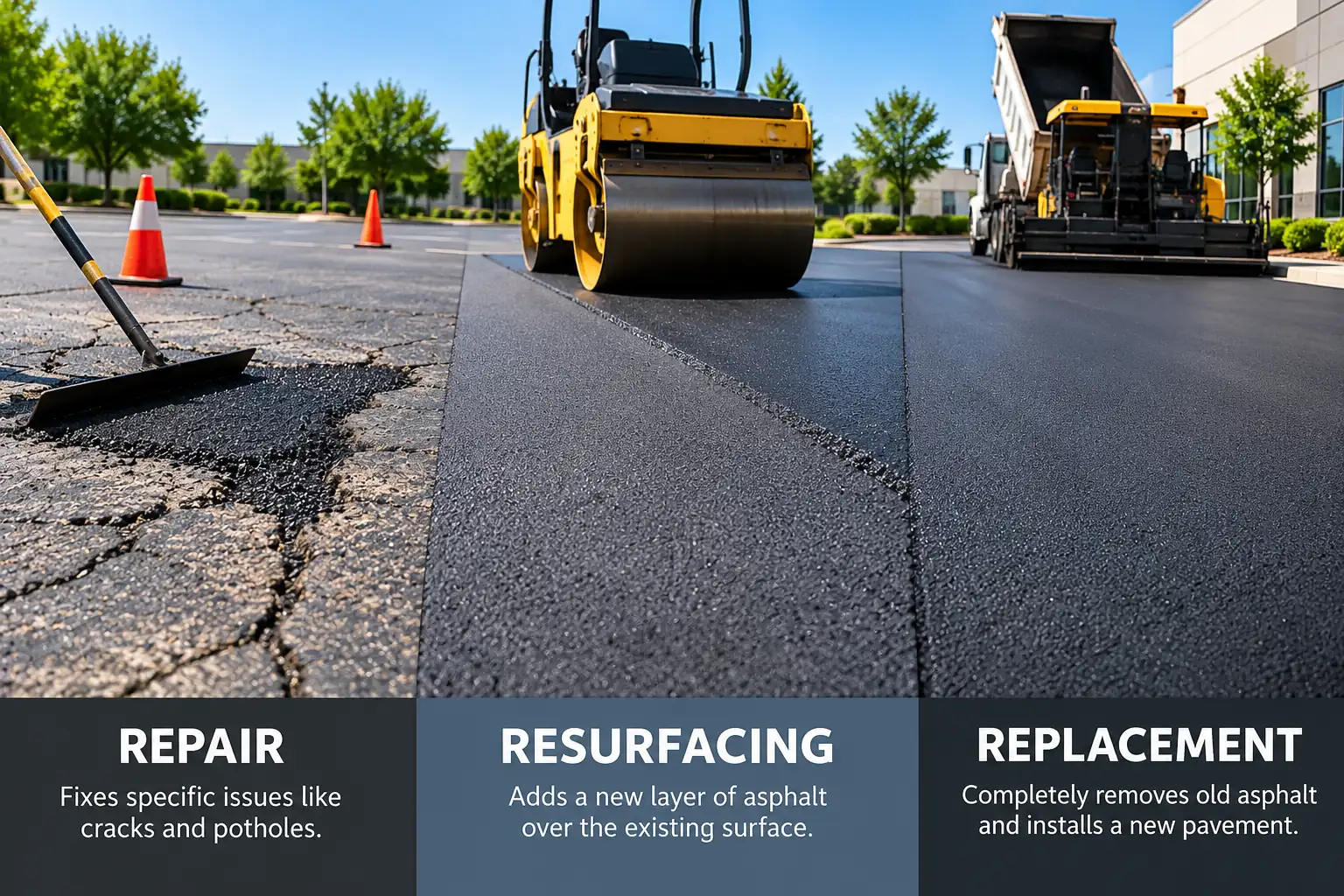
Difference Between Asphalt Repair, Resurfacing, and Replacement
Somebody calls us almost every week asking the same thing, more or less. Their lot has some cracks, maybe a pothole or two, and they want to know if they need a quick fix or something bigger. It’s a fair question, and honestly the answer depends on stuff most people never think to check, like what’s actually happening under the surface, not just what they can see standing on top of it.
Repair, resurfacing, and replacement aren’t interchangeable words for the same job. They’re three different levels of work, and picking the wrong one usually means paying for it again sooner than you should. This piece walks through what each one actually involves and how to tell which your property needs. If you’re already at the point of wanting a real assessment, our paving contractor guide explains what each option involves and when each one makes the most sense. .
So What’s Actually the Difference Between These Three?
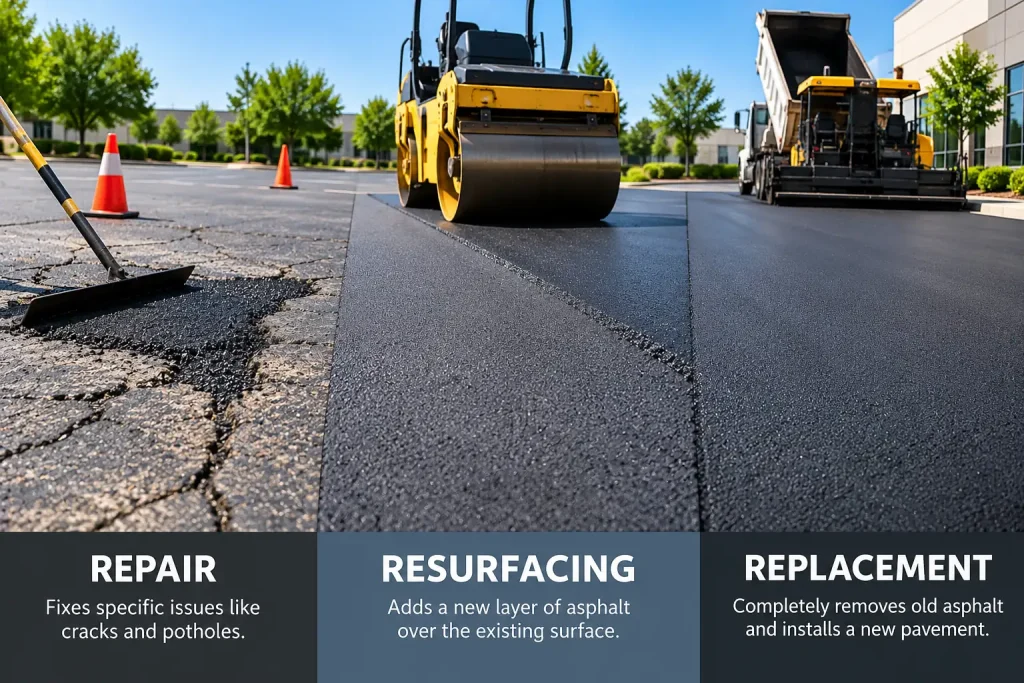
Repair fixes a specific problem area, resurfacing rebuilds the top layer over a base that’s still solid, and replacement tears everything out and starts fresh. Repair is the smallest, cheapest, most targeted option. Resurfacing sits in the middle, giving you a fresh surface without touching what’s underneath. Replacement is the full reset, used when the base itself has given out and there’s nothing left to build on top of.
When Does Repair Actually Make Sense?
Repair’s the right call when you’re dealing with one specific problem, not the whole lot. A single pothole, a patch of alligator cracking near the entrance, that one spot by the drain that just won’t hold. If everything else around it looks fine, you’re patching a weak spot, not managing a failing lot. Where it stops making sense is when you’re patching the same general area every year or two. At that point you’re not really fixing anything, you’re just buying a few months before it cracks again somewhere close by.
What Does Resurfacing Actually Involve?
Resurfacing (most people in the industry call it mill and overlay) is exactly what it sounds like. Crews grind off the beat up top layer and lay a fresh one down over a base that’s still doing its job. It’s usually the right move for a lot that looks tired everywhere, not falling apart in one spot, but tired all over, while the ground underneath is still solid. End result is a surface that looks and drives like brand new, minus the price tag and the week long shutdown that comes with tearing the whole thing out.
When Is Full Replacement the Only Real Option?
Replacement becomes necessary once the base has failed, not just the surface. Signs like deep alligator cracking, potholes that keep coming back no matter how many times they’re patched, or standing water that never drains all point to a base problem that resurfacing can’t fix. At that point, paving over it just buys a little time before the same issues come right back through the new surface.
How Much Does Each Option Typically Run?
Repair is the cheapest by a wide margin since it’s targeting a small area rather than the whole property. Resurfacing costs more than repair but noticeably less than a full replacement, since the base work, the most expensive part of any paving job, is already done. Replacement carries the highest upfront cost, but it’s also the option that resets the clock completely instead of working around an aging foundation.
Does Orange County Weather Change Which Option Makes Sense?
It can, mostly around timing rather than which option itself is right. Dry, warm weather cures asphalt faster, which is the norm here for most of the year, so resurfacing and replacement projects tend to move quickly. The exception is after a heavy winter rain, which sometimes reveals base problems that were hiding under a surface that looked fine a month earlier. A lot that seemed like a repair candidate in October can turn into a resurfacing or even replacement conversation after a wet January.
How Do You Get More Life Out of a Repair or Resurfacing Job?
Seal coating every couple of years and sealing new cracks as soon as they show up is what keeps a repaired or resurfaced lot from needing attention again too soon. Water is one of the biggest causes of pavement deterioration because it weakens the supporting base over time. Staying ahead of drainage issues, rather than letting water pool in the same spot repeatedly, also protects whatever work was just done.
How Do You Know Which One Your Property Actually Needs?
Honestly, the surface alone won’t tell you. A crack can look minor and still be sitting on top of a base that’s already failed, or it can look worse than it is and be an easy patch. This is really why a walk through with someone who knows what to look for underneath matters more than guessing from a few photos. It’s usually the difference between spending the right amount once and spending money twice on the same problem.
Not Sure Which One Fits Your Situation?
That’s honestly the most common starting point for people who reach out to us. You don’t need to already know the answer before calling. Tell us what you’re seeing, we’ll take a look, and we’ll tell you straight whether you’re looking at a repair, a resurfacing job, or something bigger. Our paving team handles all three, and we’d rather steer you toward the smaller job when that’s genuinely what fixes the problem.
Frequently Asked Questions
Is resurfacing cheaper than full replacement?
Yes, usually significantly. Resurfacing skips the base work, which is the most expensive part of a full replacement project.
Can a lot be repaired more than once before it needs resurfacing?
It can, but repeated repairs in the same area usually mean resurfacing or replacement is coming sooner rather than later.
How long does resurfacing typically last?
A properly done mill and overlay generally holds up ten to fifteen years, depending on traffic and how well it’s maintained afterward.
Does a cracked driveway always mean I need full replacement?
Not always. Surface cracking can often be repaired or resurfaced if the base underneath is still in good shape.
How do I know if my base has failed?
Signs like deep cracking, standing water, and recurring potholes usually point to base failure, which repair alone won’t fix.
Wondering How Much Life Your Pavement Has Left?
Most surfaces give you plenty of warning. The tricky part is knowing whether you’re looking at a small crack fill or something happening underneath that needs real work.
We’ve been on Riverside pavement for around 30 years now, and we’re happy to come take a look and tell you straight. Free estimates across Riverside, Corona, Moreno Valley, Norco, Jurupa Valley, and Perris.
Trending Posts
-
 20 Sep 2026 Riverside, CASealcoating vs Resurfacing: Which Does Your Lot Need?
 -
 20 Sep 2026 Riverside, CAHow Thick Should a Commercial Parking Lot Be in Riverside?
 -
 20 Sep 2026 Orange County, CAHow Often Should Commercial Parking Lots Be Sealcoated?
 -
 20 Sep 2026 Orange County, CAWhat Is the Difference Between Asphalt Repair, Resurfacing, and Replacement?
 -
 14 Sep 2026 Riverside, CAHow Long Does Asphalt Last in Riverside, CA?