
How Long Does Asphalt Last in Riverside, CA?
- September 14, 2026
- Riverside, CA
How Long Does Asphalt Last in Riverside, CA?
Pavement is one of those things you stop noticing after the first year or so. It’s just there. Then one August morning you’re backing out and you spot a crack you’re fairly sure wasn’t there in June.
Riverside is rough on asphalt. Anyone who’s sat through a summer here knows the heat doesn’t really let up, and that heat goes to work on your pavement all day, every day, for months on end. Then a winter storm shows up out of nowhere and soaks everything that’s already opened up.
So how many years should you expect? Depends on more than the asphalt itself, honestly. What follows is a straight rundown of what we tend to see across Riverside driveways and lots, what shortens the clock, and what usually buys you more time.
How Long Does Asphalt Last in Riverside?
Most asphalt that’s been built properly around here holds up somewhere in the 15 to 20 year range, assuming it gets a bit of maintenance along the way. Let it go entirely and problems tend to show up closer to year eight or ten.
Rough expectations we see locally:
- Residential driveways: often 15 to 20 years
- Commercial lots: usually a bit less, especially with truck traffic
- Overlays laid on an older base: frequently under 12 years
Here’s what catches people off guard. The asphalt isn’t really the deciding factor. The base under it is. Compaction, grading, drainage. Get that part right and the surface ages slowly. Get it wrong and good asphalt won’t save you, which is why prep work matters so much on any driveway paving job.
Why Riverside Heat Is So Hard on Pavement
Sun does most of the damage. UV exposure accelerates oxidation in the binder, making the asphalt harder and more brittle over time. Over time, you’ll notice the color drifting from black toward a chalky gray.
After that it gets brittle. Sweep it and you’ll find loose gravel coming up along the edges. Small stuff, but it’s the surface telling you something.
Then the rain arrives. Water slips into the hairline cracks the heat already made, sits in the base, and softens what’s holding your surface up. Heat opens the door. Water walks through it.
Why Cracks Turn Into Potholes
Water is often the trigger. Traffic then puts repeated loads on the weakened area and helps turn a small failure into a pothole.
The pattern usually goes like this:
- Sun dries the surface and thin cracks appear
- Rain runs into those cracks instead of off the pavement
- The base underneath softens and loses its compaction
- Cracking spreads out into that alligator pattern
- A vehicle rolls over the weak spot and it caves
None of it happens overnight. Which is frustrating, sure, but it also means there’s usually a long window to catch it while it’s still cheap.
Signs Your Pavement Is Aging Faster Than It Should
A few things are worth watching for. Spot any of these and your surface is probably running ahead of schedule, in the wrong direction.
- Color has faded from black to a washed out gray
- Cracks you can fit a coin into
- Water sitting on the surface a day after a storm
- Loose aggregate gathering along edges and corners
- Faded striping and crumbling edges on a commercial lot
Standing water is the one we’d take most seriously. It usually points back to grading, and grading issues don’t sort themselves out. On a busy commercial property that can mean looking at a larger parking lot project rather than another patch.
Does Sealcoating Really Add Years?
Yes, when the pavement is still structurally sound. Sealcoating helps protect the surface from UV exposure and moisture while slowing oxidation.
It won’t repair structural damage underneath. If the base has already gone soft, sealcoating won’t solve the structural problem underneath.
So think of sealcoating work as maintenance, not repair. Timing matters more than most people assume. Sealing a driveway that’s already cracking through is money you probably won’t get back.
Resurface or Replace: How to Tell
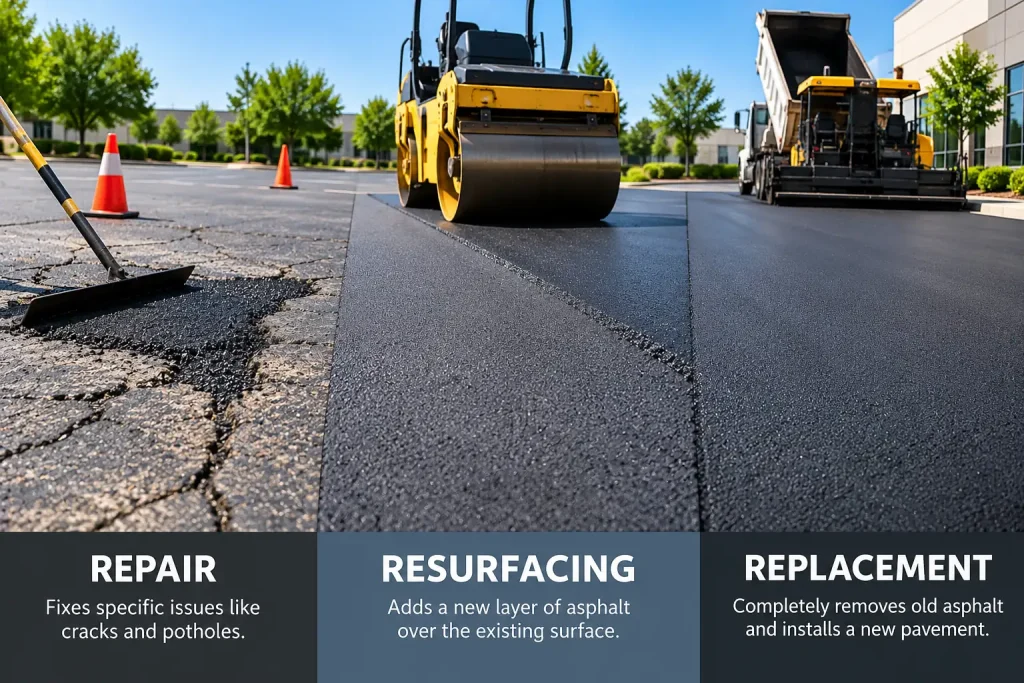
Generally speaking, if the damage sits in the top layer and the base still feels solid, resurfacing does the job. When cracking has spread across large areas or potholes keep reopening in the same spot, you’re likely looking at a full replacement.
A quick way to read it:
- Surface cracks and fading, base still firm, usually an overlay
- Widespread alligator cracking, usually mill and replace
- Same pothole coming back twice, that’s a base problem
One thing that gets skipped a lot. Paving straight over a failing surface tends to push the problem upward instead of solving it, which is why milling the old layer off belongs in an honest replacement quote.
A Maintenance Routine That Works Around Here
Keep water out, keep the surface protected. That’s really it. Not complicated, just easy to forget.
What we’d suggest for most Riverside properties:
- Fill new cracks before winter rain shows up
- Sealcoat every two to three years, depending on sun exposure
- Keep drains and gutter lines clear of debris
- Patch potholes early rather than watching them spread
- Restripe when the lines start disappearing
That last one gets pushed off constantly. Faded lines on a commercial lot are a liability issue though, and most owners end up scheduling striping work alongside sealcoating anyway.
Why Riverside Conditions Matter When Asphalt Is Installed
Contractors who work in this valley week after week build for this climate instead of a generic spec sheet. Mix, thickness, how water gets off the surface. All of that shifts when you know the pavement is going to bake for months.
Soil isn’t consistent across the city either. The older neighborhoods around Downtown and Magnolia Center don’t behave the same as newer developments out toward Orangecrest.
That kind of read comes from years of showing up, not from a manual. Worth asking any asphalt contractor in Riverside how they plan for heat and drainage before anyone starts quoting.
Frequently Asked Questions
How often should I sealcoat my driveway in Riverside?
Usually every two to three years. Our sun breaks sealer down quicker than it does in cooler areas, so waiting five years typically leaves the surface unprotected.
Can asphalt be laid during summer heat?
Yes, and warm weather generally helps. Heat lets new asphalt compact and bond well, which is why most Riverside paving happens spring through fall.
How soon can I drive on new asphalt?
Give it at least a day or two for regular vehicles. In peak summer, we’d wait longer before parking anything heavy on a fresh surface.
Is patching cheaper than repaving?
Upfront, yes. Once cracking covers a large share of the surface, repaving usually works out cheaper across the following several years.
Do parking lots last as long as driveways?
Typically not. Heavier vehicles and constant use wear commercial lots down faster than a residential driveway sees in the same period.
Wondering How Much Life Your Pavement Has Left?
Most surfaces give you plenty of warning. The tricky part is knowing whether you’re looking at a small crack fill or something happening underneath that needs real work.
We’ve been on Riverside pavement for around 30 years now, and we’re happy to come take a look and tell you straight. Free estimates across Riverside, Corona, Moreno Valley, Norco, Jurupa Valley, and Perris.
Trending Posts
-
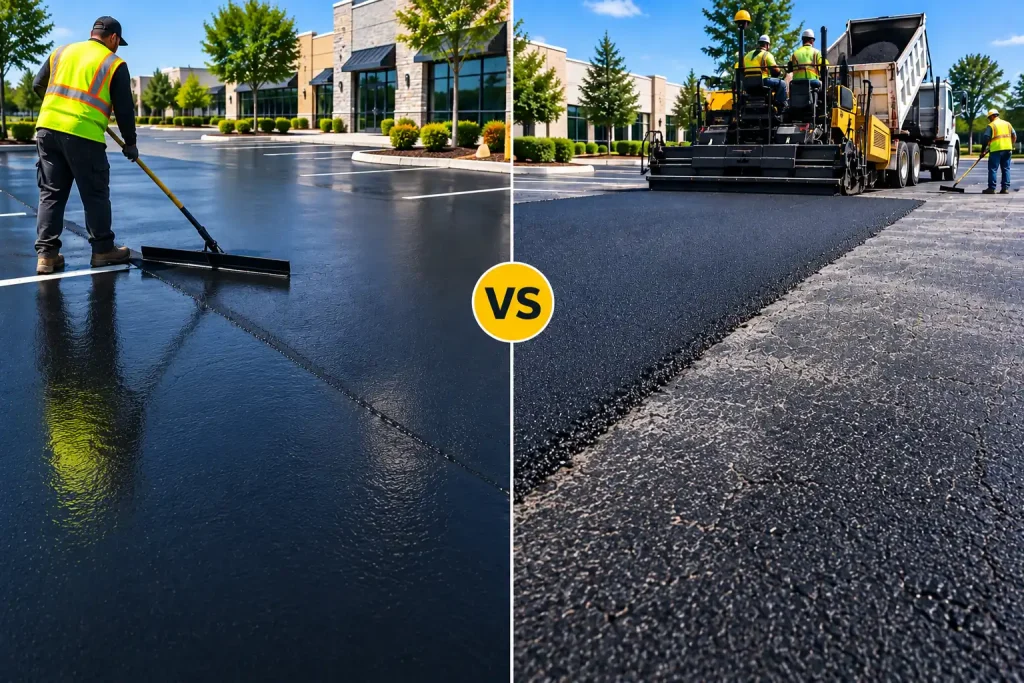 20 Sep 2026 Riverside, CASealcoating vs Resurfacing: Which Does Your Lot Need?
 -
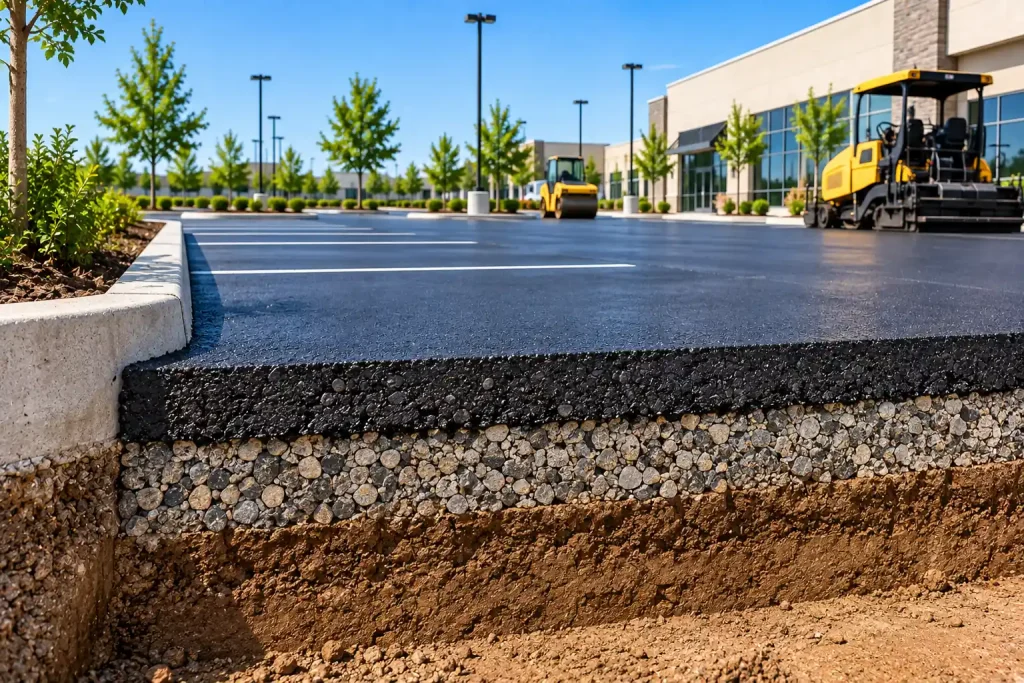 20 Sep 2026 Riverside, CAHow Thick Should a Commercial Parking Lot Be in Riverside?
 -
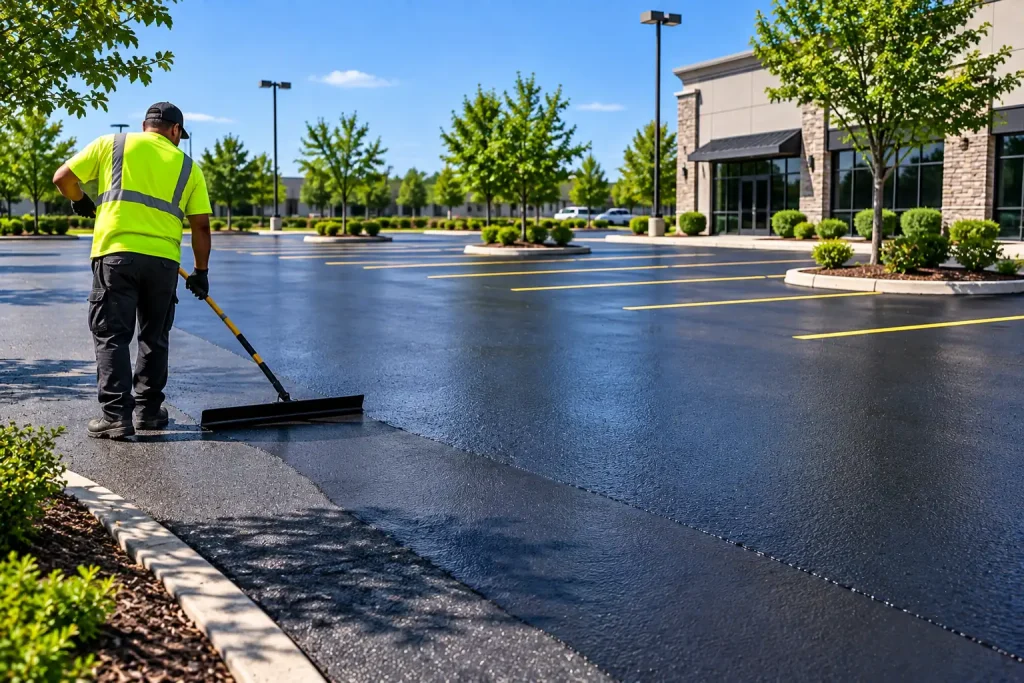 20 Sep 2026 Orange County, CAHow Often Should Commercial Parking Lots Be Sealcoated?
 -
 20 Sep 2026 Orange County, CAWhat Is the Difference Between Asphalt Repair, Resurfacing, and Replacement?
 -
14 Sep 2026 Riverside, CAHow Long Does Asphalt Last in Riverside, CA?