How Drainage Affects Asphalt in Riverside, CA
- September 13, 2026
- Riverside, CA
How Drainage Affects Asphalt in Riverside, CA
Most property owners here blame the sun when their pavement starts falling apart. The heat is part of it, but water is usually what finishes the job.
Riverside goes months without rain, then a few winter storms roll through and dump everything at once. If your driveway or lot isn’t graded to push that water toward the storm drain, it sits on the surface and works its way down through every hairline crack it can find.
That’s when the expensive damage starts. Water softens the base underneath, the asphalt loses its support, and what was a small puddle turns into a sunken area, then a pothole.
This guide covers how drainage affects asphalt in Riverside, the warning signs on your own property, and what actually fixes it. Some of it is cheap prevention. Some of it means going after the base. Either way, catching it early costs a fraction of catching it late.
How Does Drainage Affect Asphalt Pavement?
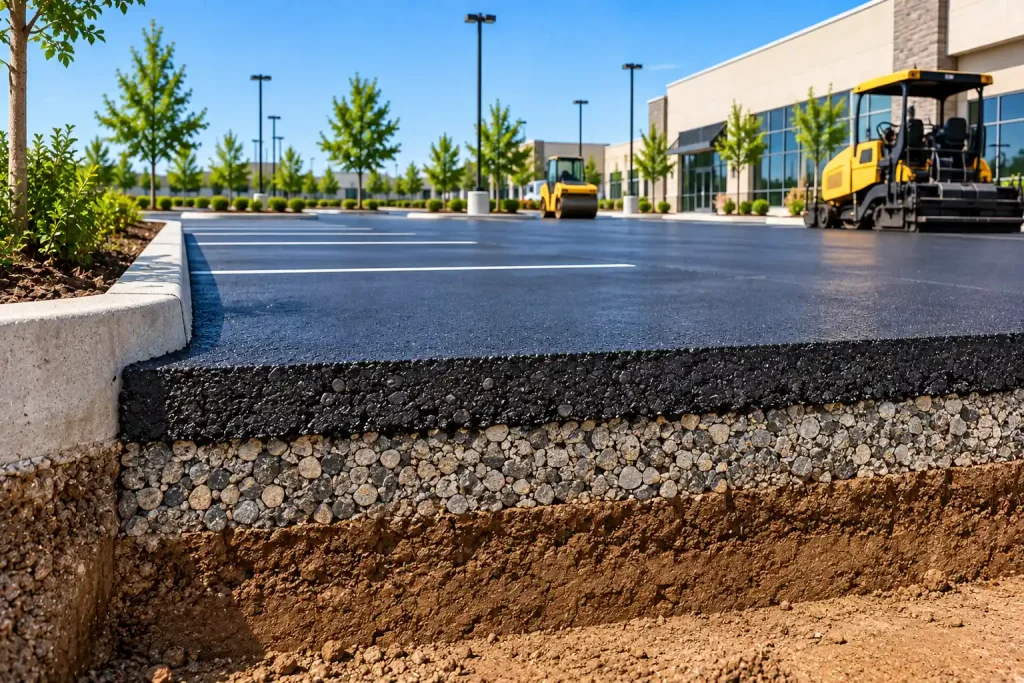
Poor drainage shortens asphalt life by weakening the base layer underneath the surface. Asphalt is only as strong as what’s beneath it, and that base is compacted rock and soil that loses its strength once it gets saturated.
Here’s the sequence we see on almost every failed lot in Riverside:
- Water pools instead of flowing off the surface
- It seeps through small cracks and joints
- The saturated base softens and shifts under weight
- The unsupported asphalt cracks, sinks, and breaks apart
The surface gets blamed, but the failure started below it.
Why Water Pools on Riverside Driveways and Parking Lots
Standing water almost always comes down to grade. Many paved surfaces are designed with roughly 1% to 2% cross slope, but the appropriate grade depends on the site and drainage design.
When that slope is missing, it usually traces back to one of these:
- The original job was laid flat over an existing surface with no re-grading
- The base was never compacted evenly, so it settled in low spots
- Landscaping, curbs, or an added addition changed where water travels
- The lot drains toward a storm drain that sits higher than it should
Any lot with a birdbath that lingers for a day after rain has a grading problem, not a surface problem.
Why Riverside’s Climate Makes Drainage Problems Worse
Our climate is harder on asphalt than a wet climate is, because pavement here takes damage from both directions. Triple digit summers and intense UV exposure accelerate oxidation, making asphalt binder harder and less flexible over time.
Then the winter storms arrive. That brittle, already-cracked surface soaks up water like a sponge instead of shedding it.
Add in expansive clay soils in parts of the city that swell when wet and shrink when dry, and you get movement under the pavement that a lot of out-of-area contractors don’t plan for. It’s one of the reasons local knowledge matters when you’re choosing a Riverside asphalt contractor.
Warning Signs Your Asphalt Has a Drainage Problem
The clearest sign is water that’s still sitting on your pavement more than 24 hours after rain. But drainage failures show up long before you’d call them potholes.
Watch for:
- Puddles or damp rings that stay in the same spot every time
- Cracking in a web or grid pattern, often called alligator cracking
- Soft or spongy areas that flex when a vehicle drives over them
- Sunken spots near drains, curbs, or the edge of the pavement
- Stains, silt, or gravel washing across the surface after storms
Alligator cracking is the one to take seriously. It usually indicates structural distress and can point to inadequate support beneath the asphalt.
What Poor Drainage Actually Costs You
Ignoring drainage turns a maintenance expense into a reconstruction expense. Sealing and patching a healthy surface is a small line item. Rebuilding a saturated base is not.
There’s a liability side too, especially on commercial property:
- Standing water becomes a slip hazard and an ADA problem near accessible routes
- Potholes lead to vehicle damage claims from tenants and customers
- Faded parking lot striping and pooling water together make a property look neglected
- Water that runs the wrong way can end up in a building instead of the storm drain
Most of our full-depth repair calls started as a puddle someone drove around for two years.
How Grading and Base Prep Prevent Water Damage
The fix for drainage starts before any asphalt gets laid, during grading and base compaction. A properly built surface directs water where you want it, so nothing has time to soak in.
On a new install or a full replacement, that means:
- Removing the failed surface and any contaminated base material
- Shaping the subgrade to a deliberate slope toward drains or daylight
- Compacting the aggregate base in lifts, not all at once
- Laying asphalt at the right thickness for the traffic it carries
- Sealing edges and joints where water likes to enter
This is exactly why we don’t pave over a bad surface. It’s also why asphalt milling exists as a step instead of an upsell.
Drainage Maintenance That Extends Pavement Life
The best long-term protection is keeping water moving and keeping the surface sealed. Both are cheap compared to what happens when you skip them.
A realistic Riverside maintenance rhythm looks like this:
Timing | What to do |
Monthly | Clear leaves and debris from drains and gutter lines |
Twice a year | Walk the property after rain and note where water sits |
Yearly | Fill new cracks before winter storms arrive |
Every 2 to 3 years | Reseal the surface to block UV and moisture |
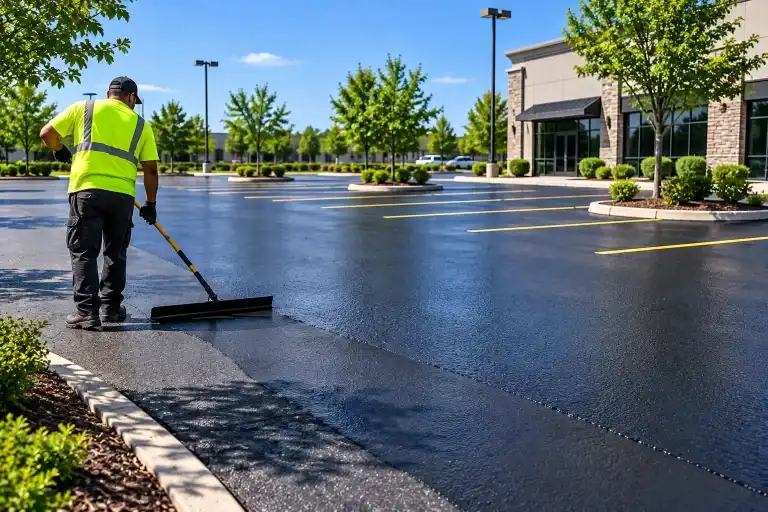
Sealcoating doesn’t fix a grading problem, but it does stop water from soaking through the surface while you address one.
Can Drainage Be Fixed on Existing Pavement?
Yes, in most cases you can correct drainage without tearing out the entire lot. The right approach depends on whether the base is still solid.
Common repairs, from lightest to heaviest:
- Crack sealing: closes the entry points on an otherwise sound surface
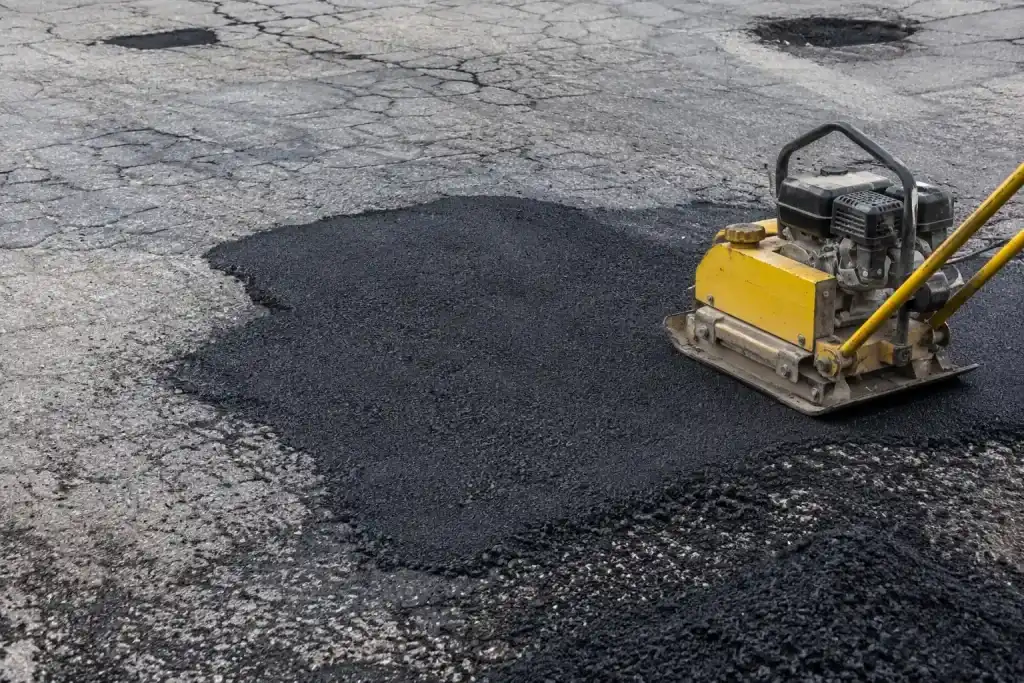
- Patching: removes and replaces isolated failed areas
- Milling and overlay: shaves the old surface and re-establishes slope
- Full-depth reconstruction: rebuilds the base where saturation has already destroyed it
An honest inspection tells you which one you’re looking at. We’d rather quote a patch than sell a rebuild you don’t need.
Frequently Asked Questions
How long should water sit on asphalt after it rains?
No longer than 24 hours. Anything that lingers past a day points to a grading issue that will start breaking down the surface.
Does sealcoating fix drainage problems?
No. Sealcoating protects the surface from water and UV, but it can’t change the slope. You still need proper grading to move water off the pavement.
Do potholes come from rain or from traffic?
Both, working together. Water weakens the base first, then vehicle weight collapses the unsupported asphalt above it into a pothole.
Is drainage really an issue in Riverside if it barely rains?
Yes. Our dry heat leaves asphalt cracked and porous, so the little rain we do get soaks straight into the base instead of running off.
What’s the best time of year to fix drainage in Riverside?
Late spring through early fall. Dry, warm conditions let asphalt cure properly and give you the repair finished before winter storms.
How much does poor drainage shorten pavement life?
It can cut usable life close to in half. A lot built to last 20 years may need major work in 8 to 12 if water keeps sitting on it.
Take a Look at Your Property After the Next Rain
Walk your driveway or lot the morning after a storm and note where water is still sitting. Those spots are telling you exactly where your pavement will fail first.
If you’d rather have someone else read it, we’re happy to come out and look. Husky Asphalt Paving has been working on Riverside pavement for 30 years, from the Wood Streets to Canyon Crest to the commercial lots out near Tyler. Estimates are free, and we’ll tell you straight if it can wait.
Trending Posts
-
 21 Oct 2026 Riverside, CAAsphalt vs Concrete Driveways in Riverside's Heat
-
21 Oct 2026 Riverside, CAHow Long Does an Asphalt Driveway Last in Riverside?
-
 20 Sep 2026 Riverside, CASealcoating vs Resurfacing: Which Does Your Lot Need?
-
 20 Sep 2026 Riverside, CAHow Thick Should a Commercial Parking Lot Be in Riverside?
-
20 Sep 2026 Orange County, CAHow Often Should Commercial Parking Lots Be Sealcoated?