What Causes Potholes in Riverside, CA?
- September 13, 2026
- Riverside, CA
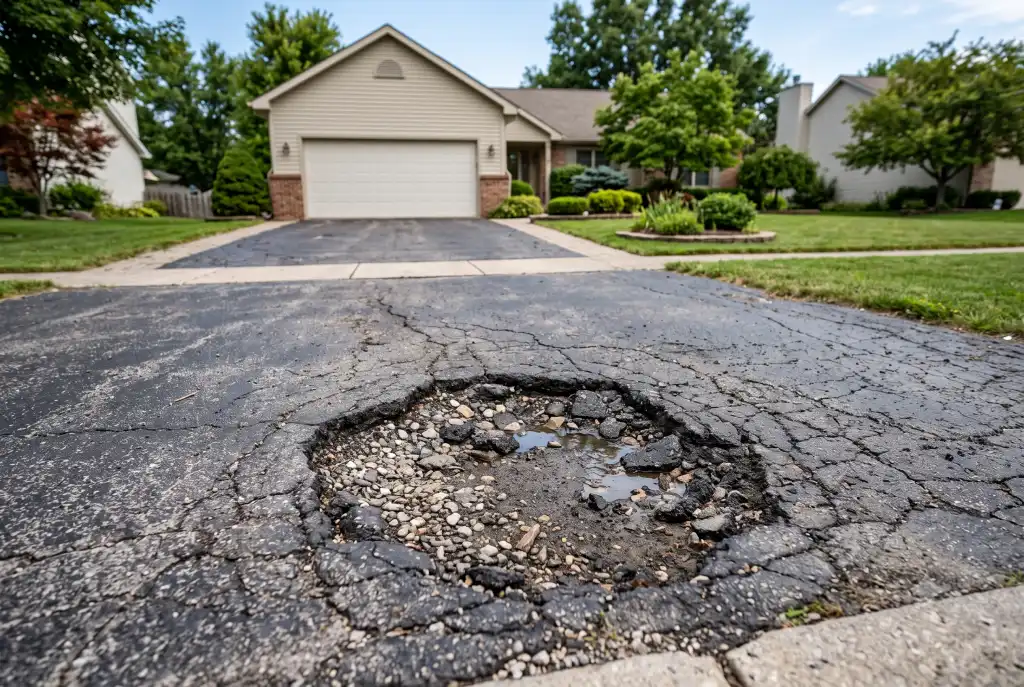
Potholes get treated like they appear overnight.
You probably notice a pothole the same way everyone else does. By hitting it. That thud coming through the steering wheel on your way out of a shopping center, or the one in your own driveway you’ve started steering around without thinking about it.
Potholes get treated like they appear overnight. They don’t. By the time one opens up, something’s been going wrong under that pavement for a while, sometimes a couple of years.
What follows is how they actually form around Riverside, why the same one keeps showing back up after it’s been filled, and what tends to stop the cycle. Some of this is fixable in an afternoon. Some of it isn’t, and it’s worth knowing the difference before you spend money on it.
What Actually Causes a Pothole?
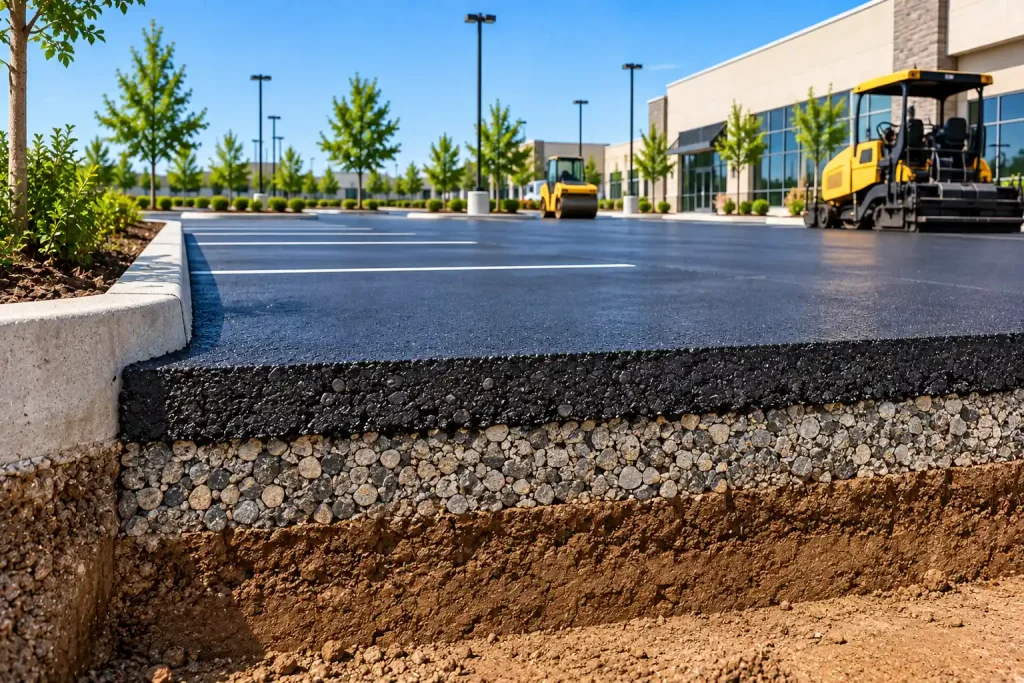
Water and weakened support below the surface are usually the starting point. Traffic then turns that weakness into a pothole.
The asphalt isn’t really failing on its own. It’s collapsing because whatever was holding it up stopped doing that job.
Which is why potholes cluster in specific spots instead of appearing evenly. Wherever water gets in and lingers, that’s where you’ll find them. Everywhere else on the same lot can be perfectly fine.
Why They Show Up After Riverside Storms
Our rain arrives in bursts rather than steadily, and that’s harder on pavement than it sounds. Months of dry heat open the surface up, then several inches of water arrive over a couple of days with nowhere good to go.
Everything that opened during summer becomes an entry point. Water runs in, saturates the base, and the supporting material loses strength and becomes less able to carry traffic loads.
Then traffic does the rest. A delivery truck rolls over a softened section, the surface flexes further than it should, and within a few weeks there’s a hole. A pothole that appears after winter rain may have started with cracks that opened months earlier. More on that seasonal cycle in our breakdown of how long asphalt usually lasts around here.
Why Parking Lots Get Them Faster Than Driveways
Weight and repetition. A commercial lot takes delivery trucks, dumpster pickups, and hundreds of vehicles turning in the same places every day, while a driveway sees a couple of cars.
Turning is the underrated part. Wheels twisting against pavement grind at the surface far more than driving straight across it does, which is why potholes so often appear near entrances, loading areas, and dumpster pads.
Drainage tends to be worse on large lots too. More surface area means more water heading somewhere, and if the grade isn’t right it collects instead of leaving.
Does a Pothole Mean a Bigger Problem Underneath?
Usually, yes. A pothole is generally the visible end of a base problem, not a surface one, which is why it matters what the pavement around it looks like.
A few things worth checking:
- Is the surrounding asphalt broken into small interconnected pieces
- Does water sit nearby after it rains
- Have other holes formed within a few feet of it
- Has this same spot been filled before
If several of those apply, the issue is under the pavement, not on it. That pattern usually shows up as alligator cracking first, which we covered in what different crack patterns are telling you.
Why Filled Potholes Keep Coming Back
Because filling treats the hole, not the reason it formed. Throw cold patch into a pothole sitting over a soft base and you’ve got maybe a season before it opens again.
Temporary patching has its place. If you need a lot safe by Friday, that’s a legitimate reason to do it.
A repair that holds usually means cutting out the damaged section, addressing whatever’s wrong beneath it, and rebuilding properly. When holes have spread across a wide area, that conversation often shifts toward milling and repaving the surface instead of chasing individual spots.
What Potholes Cost a Business Owner
More than the repair, typically. A pothole in a customer lot creates a genuine liability exposure, and vehicle damage claims are not rare.
There’s a perception cost too. Customers read a broken lot as a business that isn’t paying attention, whether that’s fair or not.
And the repair itself only gets more expensive. A hole that could’ve been handled as a small section becomes a full corner of the lot if it sits through another rainy season.
How to Keep Them From Forming
Keep water out of the base. That’s genuinely most of it, and it’s cheaper than any repair you’ll do afterward.
What we’d suggest for Riverside properties:
- Seal cracks before winter, not after
- Sealcoat the surface every couple of years to slow new openings
- Correct any area where water pools rather than drains
- Clear debris out of drains and gutter lines
- Handle small holes early instead of waiting for a group of them
Protecting the surface is the piece most owners skip, and it’s the cheapest line item on the list. Regular sealcoating won’t fix a failed base, but it stops a lot of them from failing in the first place.
Frequently Asked Questions
Can I fill a pothole myself?
For a small one, yes. Store bought cold patch works as a temporary fix, though our summer heat tends to break it down within a season or two.
Why does the same pothole keep coming back?
The base under it was never repaired. Filling only replaces the surface material, so the weak spot underneath keeps collapsing again.
How quickly do potholes get worse in Riverside?
Faster after rain. Once water reaches the base, a small hole can widen noticeably within weeks under regular traffic.
Is a pothole covered by property insurance?
Usually not as maintenance. Damage claims from customers may be, but ordinary pavement deterioration is generally treated as an owner responsibility.
When is patching not worth it anymore?
Once holes appear in several spots across a lot. At that stage, resurfacing typically costs less than repeatedly repairing individual sections.
Got a Hole That Keeps Reopening?
That’s usually the sign it’s time to have someone actually look underneath rather than fill it again.
We’ve been working on Riverside pavement for around 30 years, and we’ll tell you straight whether you’re dealing with a patch or something bigger. Free estimates across Riverside, Corona, Moreno Valley, Norco, Jurupa Valley, and Perris. You can see everything we handle on our paving and repair services page.
Trending Posts
-
 21 Oct 2026 Riverside, CAAsphalt vs Concrete Driveways in Riverside's Heat
-
21 Oct 2026 Riverside, CAHow Long Does an Asphalt Driveway Last in Riverside?
-
 20 Sep 2026 Riverside, CASealcoating vs Resurfacing: Which Does Your Lot Need?
-
 20 Sep 2026 Riverside, CAHow Thick Should a Commercial Parking Lot Be in Riverside?
-
20 Sep 2026 Orange County, CAHow Often Should Commercial Parking Lots Be Sealcoated?