
Why Do Asphalt Parking Lots Fail Early?
- August 11, 2026
- Orange County, CA
Why Do Asphalt Parking Lots Fail Early?
We get this question a lot, usually from someone standing in a lot that is only three or four years old and already looks rough. Cracks everywhere, a few soft spots near the entrance, maybe a puddle that never seems to dry out. And nine times out of ten, it is not bad luck. Something got skipped early on, either in how the base was built or how the traffic on that lot was planned for.
We have paved enough properties around Orange County to notice a pattern. Two lots go in around the same time, same neighborhood even, and one is still holding up fine a decade later while the other is already falling apart. The difference almost never comes down to the asphalt itself. It comes down to what happened before the asphalt ever got laid, or how the lot has been used since.
This piece breaks down the real reasons commercial lots fail early and what actually keeps that from happening. Pair it with our commercial paving services page if you want the fuller picture of what a proper installation looks like from the start.
So Why Do Parking Lots Actually Fail Early?
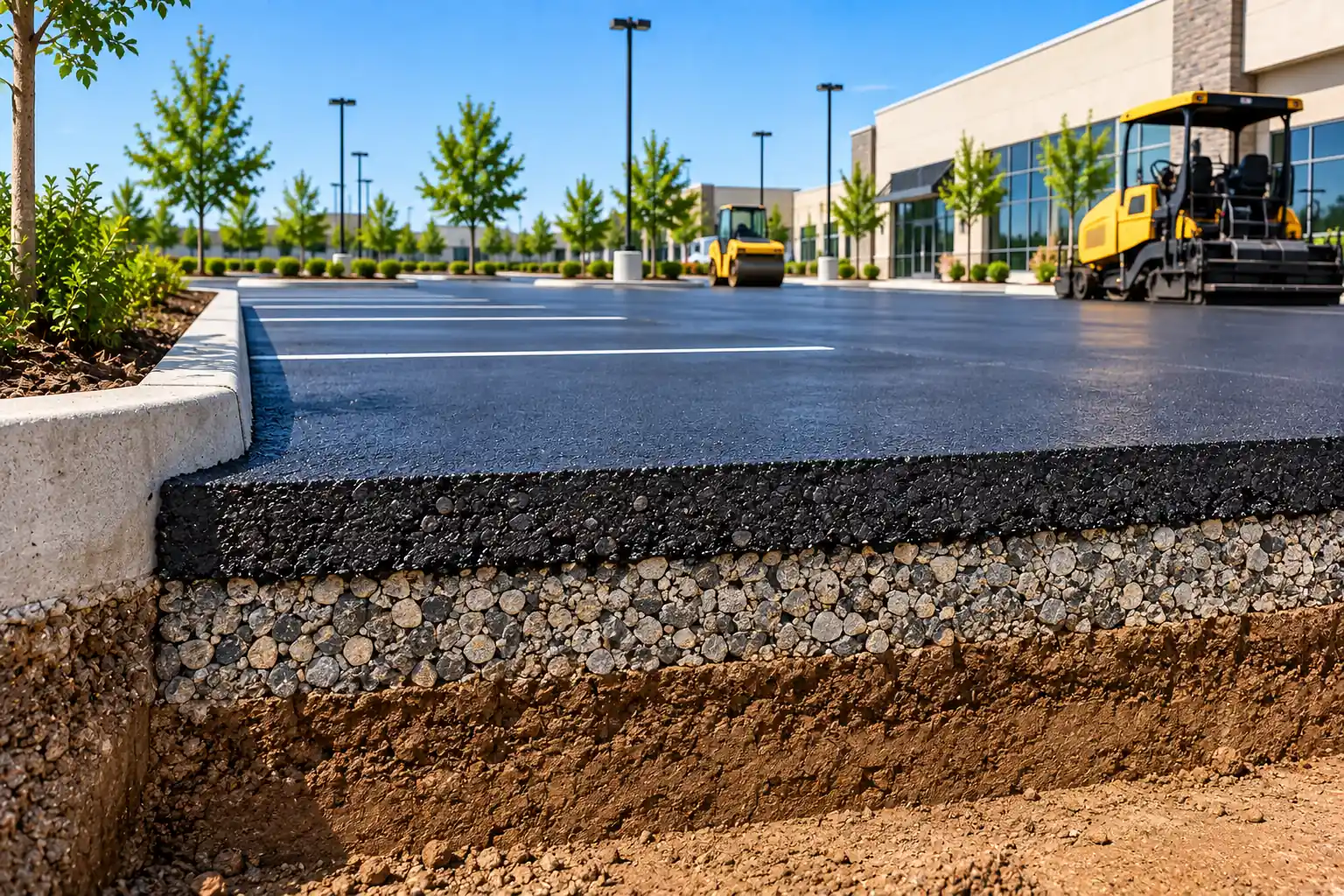
Almost always it traces back to the base, not the asphalt on top. Asphalt is only as strong as the base beneath it. If the underlying soil isn’t properly compacted or drainage isn’t addressed, the pavement above will eventually crack, settle, or fail.
Why Do Cracks Keep Coming Back After They Are Patched?
Because the patch is only fixing what you can see, not what caused it. If water is still sneaking into that crack and reaching the base, or the ground below is still moving around, that same spot is going to open right back up, sometimes within a single rainy season. Contractors who actually check the base before slapping down a patch tend to save their clients a lot of repeat visits down the road.
Is Drainage Really That Big of a Deal?
Bigger than most people assume. Water that sits instead of draining works its way underneath the pavement and starts eating away at the base from below, slowly. Give it enough time and you end up with potholes, that alligator skin looking cracking, or spots that feel a little spongy when you walk over them. Lots with flat grading or drains that never get cleaned out are the usual suspects here.
Could the Asphalt Just Be Too Thin?
Sometimes, honestly, yes. Asphalt placed at a thickness meant for a quiet residential driveway is not going to hold up under daily delivery trucks and forklifts. Commercial traffic puts a lot more weight and pressure on pavement than most people realize, and when a lot gets built without planning for that, cracking and rutting can show up years earlier than it should.
Do Heavy Trucks Really Wear Out a Lot Faster?
Yes, particularly if nobody accounted for that traffic when the lot was designed. Trucks turning tight corners, braking near a dock, backing into the same spot over and over. All of that concentrates stress in specific areas, usually entrances, loading zones, and dumpster pads. Those spots tend to fail long before the rest of the lot simply because they take a beating every single day.
Does Orange County Weather Have Anything to Do With It?
Warm, dry weather is generally kind to asphalt, but the occasional heavy winter rain can expose weak spots fast. Because this area does not see constant freeze and thaw cycles the way colder regions do, asphalt here often lasts longer when it is installed correctly. The tradeoff is that when a lot does have drainage or base issues, a strong rain event can reveal that problem almost overnight, since the pavement rarely gets a slow buildup of stress the way it might elsewhere.
So What Actually Prevents Early Failure?
Staying on top of small stuff. Seal coating every couple of years protects the surface from sun exposure and moisture. Sealing a crack the moment it appears keeps water out before it becomes a base problem. Fixing drainage issues instead of living with a puddle in the corner for years stops small problems from turning into structural ones. None of this is complicated. It just takes actually doing it on a schedule instead of waiting until something looks bad.
What Should You Be Watching For?
Alligator style cracking, water that pools and never drains, sections that feel soft or seem to be sinking a little. None of that is just cosmetic. Those are early signs the base underneath has already been compromised, and if it gets ignored, a full repave tends to show up sooner than anyone wants. Catching it early means you get to plan the repair on your own timeline instead of dealing with an emergency once part of the lot becomes unsafe.
Protecting What You Have Built
A parking lot takes more daily abuse than almost any other part of a commercial property, and it deserves to be treated that way from day one. Getting the base right, building for the traffic it will actually see, and staying ahead of the small repairs instead of ignoring them makes a bigger difference than most owners expect. If your lot is already showing some of these signs, or you just want it built right from the start, our paving team is glad to take a look and tell you honestly what your property needs.
FAQs
Why does my parking lot already have cracks and it is only a few years old?
Cracks that show up early usually mean a base issue, often caused by poor drainage or soil that was not compacted properly underneath.
Can a parking lot be repaired instead of fully repaved?
Often, yes, as long as the base is still solid. Once the base has failed, patching just delays the repave instead of fixing anything.
Does drainage actually affect how long asphalt lasts?
Quite a bit. Standing water is one of the fastest ways to weaken the base, which shortens the life of everything above it.
Does heavier commercial traffic shorten a lot’s lifespan?
Yes, especially near entrances and loading areas, since trucks turning and braking repeatedly puts extra stress right on those spots.
How long should a properly installed commercial lot actually last?
With solid installation and regular upkeep, most commercial lots hold up well past a decade, often reaching fifteen to twenty years.
Not Sure Whether Your Driveway Has 5 Years or 15 Years Left?
No two driveways age the same way, even ones that look nearly identical from the curb. Husky Asphalt Paving can take a look at yours, explain what’s actually driving the wear, and help you figure out whether maintenance, repairs, resurfacing, or a full replacement makes the most sense for your budget. A lot of the time the answer is simpler, and cheaper, than people expect. Reach out to Husky Asphalt Paving for a straightforward look at where your driveway actually stands.
Trending Posts
-
 20 Sep 2026 Riverside, CASealcoating vs Resurfacing: Which Does Your Lot Need?
 -
 20 Sep 2026 Riverside, CAHow Thick Should a Commercial Parking Lot Be in Riverside?
 -
 20 Sep 2026 Orange County, CAHow Often Should Commercial Parking Lots Be Sealcoated?
 -
20 Sep 2026 Orange County, CAWhat Is the Difference Between Asphalt Repair, Resurfacing, and Replacement?
-
 14 Sep 2026 Riverside, CAHow Long Does Asphalt Last in Riverside, CA?