
How Fast Can You Reopen After Commercial Asphalt Paving in Orange County?
- July 28, 2026
- Orange County, CA
How Fast Can You Reopen After Commercial Asphalt Paving in Orange County?
If you own a business anywhere from Anaheim to Santa Ana, “how much” isn’t really the first question on your mind when a paving job comes up. It’s “how long am I dealing with this.” Every day a lot’s blocked off is a day fewer customers pull in, or a delivery truck has to reroute somewhere it shouldn’t be.
Here’s the part most property owners don’t expect: commercial paving in Orange County usually moves faster than people assume, especially when it’s scheduled around your hours instead of just whenever a crew has an opening. This isn’t meant to replace our commercial asphalt paving page , think of it more as the practical, what-actually-happens version that goes with it.
How Long Does Commercial Asphalt Paving Actually Take?
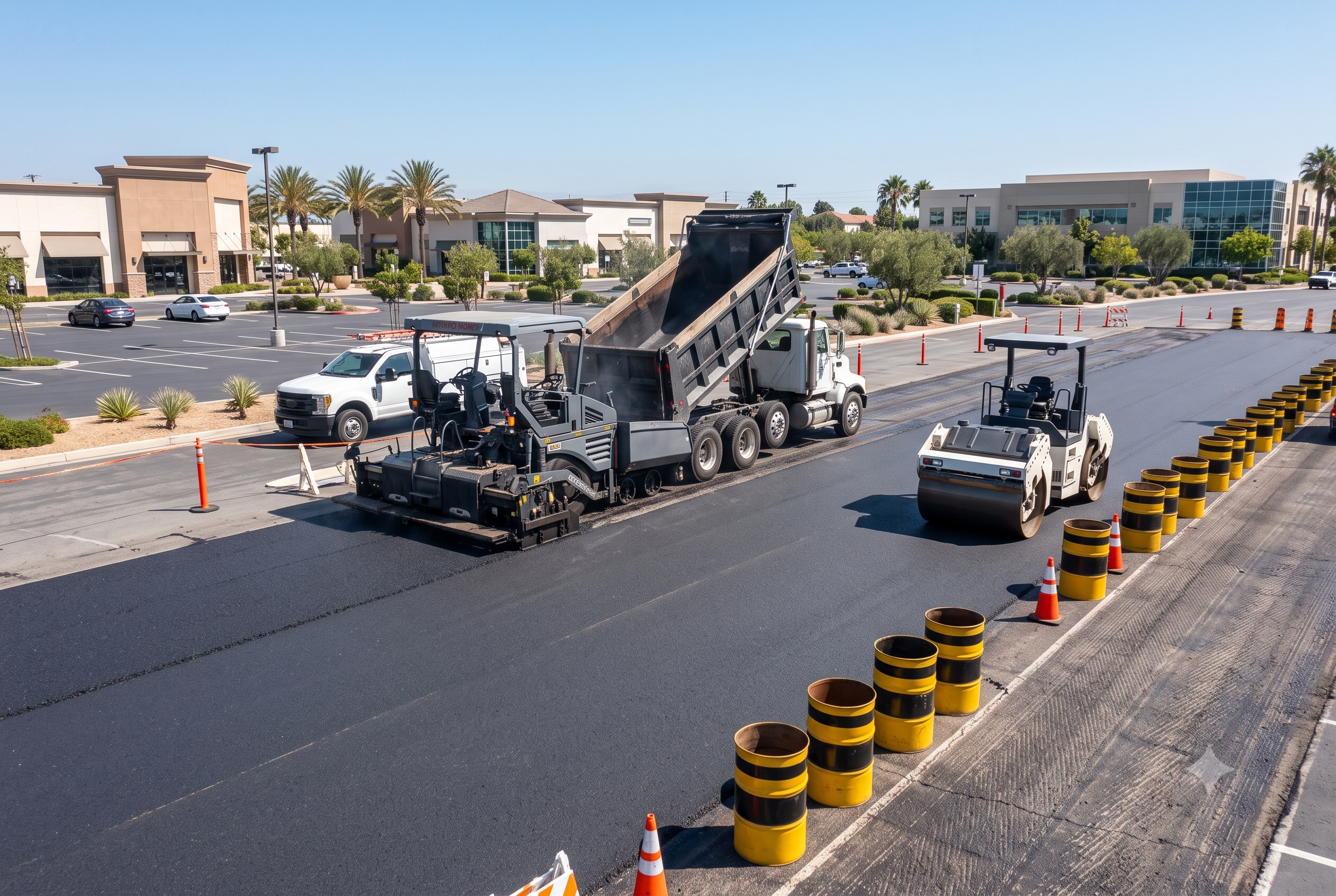
Most jobs run two to five days, start to finish. A small driveway or single entry point can be done in a day. A full warehouse yard or a big retail lot might take closer to a week. There are a handful of stages that make up that window, tear-out or milling, prepping the base, laying the new asphalt, then letting it cure, and each one moves at its own pace. Rush any of them and you’re basically buying yourself cracks a year or two down the line.
How Soon Can You Reopen for Business After Paving?
Walking on it is usually fine within a day. Driving on it is a different story, plan on 3 to 5 days before it’s ready for real vehicle traffic. Fresh asphalt is still soft right after it’s laid, and a delivery truck taking a tight turn on it can leave a rut that’s there for good. That’s the whole reason paving in sections works so well. Half your lot stays open while the other half sets up, instead of shutting the entire property down at once.
What Slows Down a Commercial Paving Timeline?
Nine times out of ten, it’s not the asphalt causing delays, it’s what’s underneath it. Soft, waterlogged soil or old buried debris means crews have to stop and fix the base before anything gets paved on top. Utility lines, drainage fixes, permits, commercial sites tend to have more of these than a residential driveway ever would. It’s part of why a real walk-through before quoting matters. Better to find these problems on day one than in the middle of the job.
Mill and Overlay vs. Full Replacement, Which One’s Faster?
Mill and overlay wins on speed almost every time, often a day or two, versus four-plus for a full tear-out and replace. Milling just grinds off the top worn layer and lays fresh asphalt over a base that’s still structurally sound. Full replacement comes into play when that base isn’t sound anymore, alligator cracking, potholes that keep coming back no matter how many times they’re patched, water that just sits there and never drains. Figuring out which camp your lot falls into is basically what a proper assessment is for.
Does Orange County Weather Actually Affect Paving Schedules?
Yes, and mostly in a good way. Warm, dry weather cures asphalt faster, and that’s the norm here for most of the year, the ideal window sits somewhere between 50 and 90 degrees. Coastal spots like Newport Beach or Huntington Beach sometimes deal with morning marine layer that can push back the start of a pour by a bit. Inland, in places like Anaheim or Corona, the drier heat tends to make for tighter, more predictable curing windows.
Keeping Business Disruption to a Minimum
Off-peak hours and slower days can cut down disruption more than people expect. Early starts, weekends, splitting the lot into sections so there’s always somewhere for customers to park, all of that helps. A little signage and a temporary parking plan go further than most owners realize too. Any contractor who’s paved a fair number of Orange County retail centers or office parks should already have a phasing plan worked out before you even bring it up.
How Often Should a Commercial Lot Be Maintained?
Seal coat every two to three years, and seal cracks the moment they show up, do that and most lots never need an emergency repair. Preventive work is cheaper in every sense, money and downtime both, since small cracks caught early almost never require closing the lot to fix. Lots that get this kind of attention also tend to go longer between full repaves, sometimes by years.
Warning Signs Worth Catching Early
Alligator-style cracking, water pooling after rain, potholes that reappear after being patched, none of that’s cosmetic. It’s the base telling you it’s failing, and ignoring it just means a bigger, more expensive job later. Catching it early is usually the difference between a repave you schedule on your terms and one you’re forced into.
Ready to Plan This Around Your Business Instead of Against It?
A paving project doesn’t have to eat into a week of revenue. With the right sequencing and a contractor who works around your hours, most Orange County businesses are back to normal in days. If you’re trying to figure out timing, scope, or whether you’re looking at a mill and overlay or a full replacement, our commercial paving team can walk the property and map it out before anything’s locked in.
FAQs
How long does asphalt need to cure before parking on it?
Foot traffic’s usually fine after a day, but give it 3 to 5 days before driving on it to avoid ruts in the fresh surface.
Can I stay open during commercial paving?
Most of the time, yes. Phasing the lot lets part of it stay open while the rest cures, which works well on bigger Orange County properties.
Does Orange County heat affect curing time?
It does, and it helps. Warm, dry weather speeds things up, so local paving jobs tend to finish faster than in cooler, wetter regions.
How long does a resurfaced commercial lot actually last?
A well-installed overlay generally holds up 12 to 20 years, longer if it gets seal coating and crack repair along the way.
What’s the best time of year to schedule commercial paving here?
Late spring through early fall, the weather stays dry and warm enough for consistent, fast curing with fewer delays.
How much notice should I give before scheduling a project?
Two to four weeks is a safe bet. That leaves room for a site walk-through, permits if needed, and phasing around your hours.
Trending Posts
-
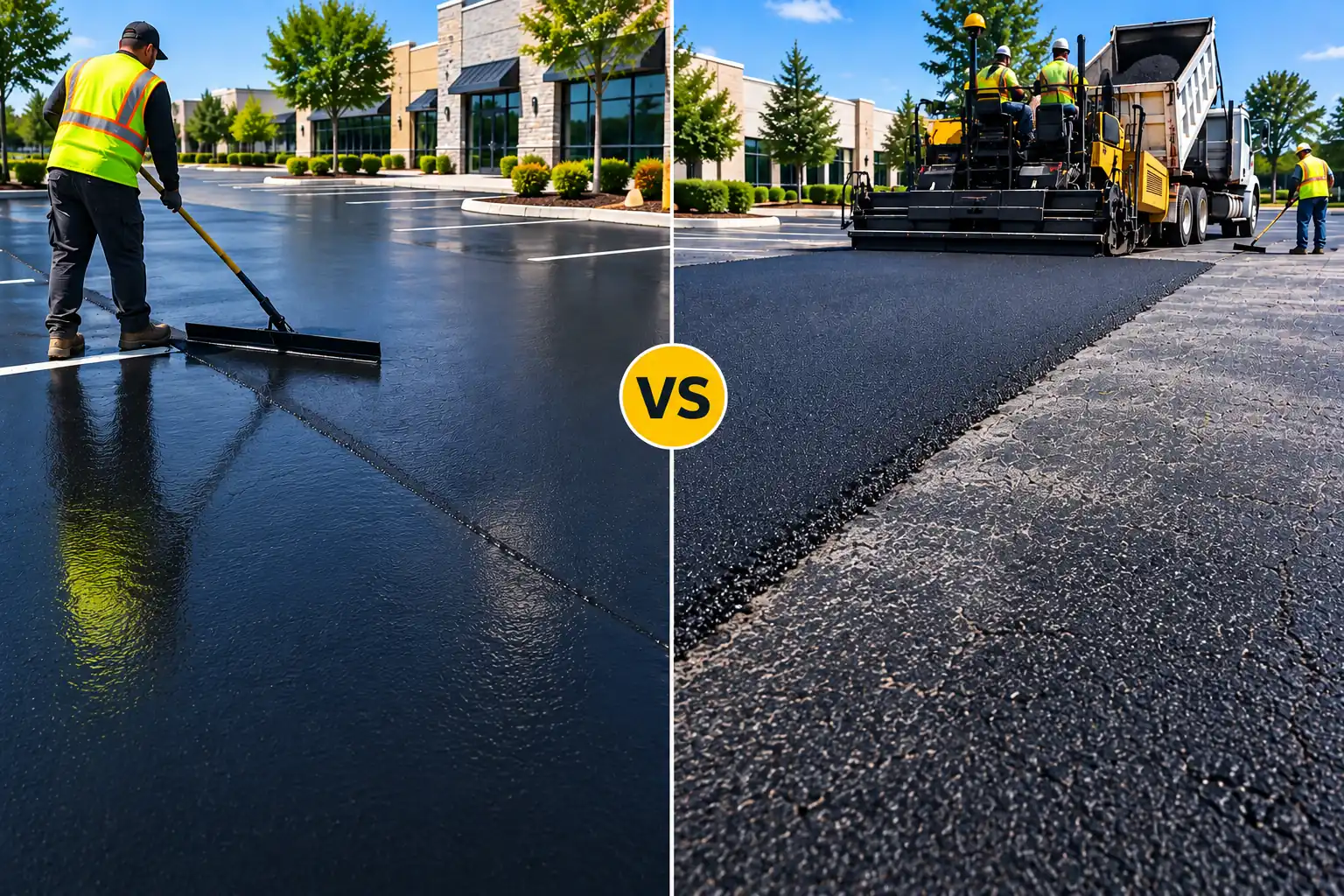 20 Sep 2026 Riverside, CASealcoating vs Resurfacing: Which Does Your Lot Need?
 -
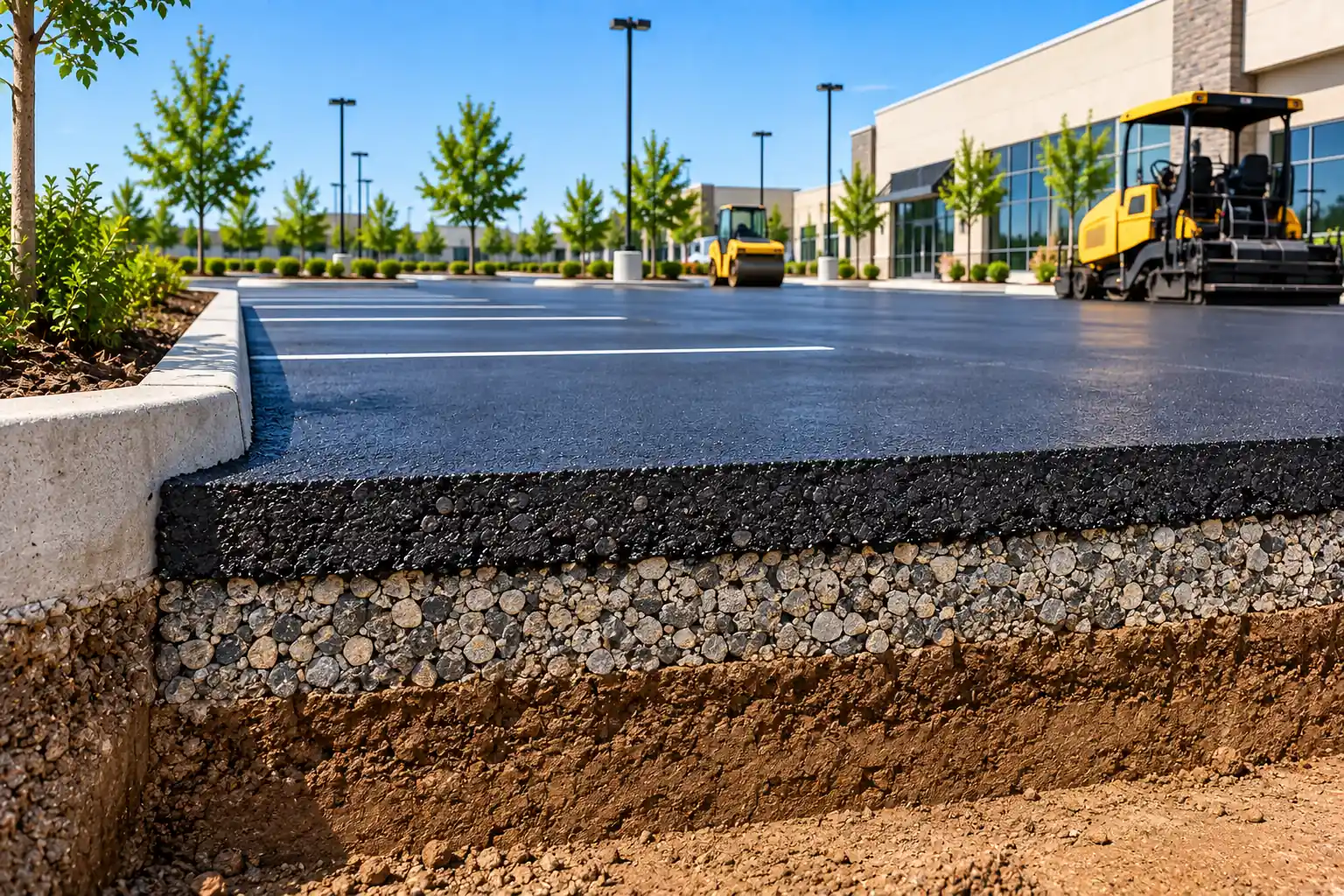 20 Sep 2026 Riverside, CAHow Thick Should a Commercial Parking Lot Be in Riverside?
 -
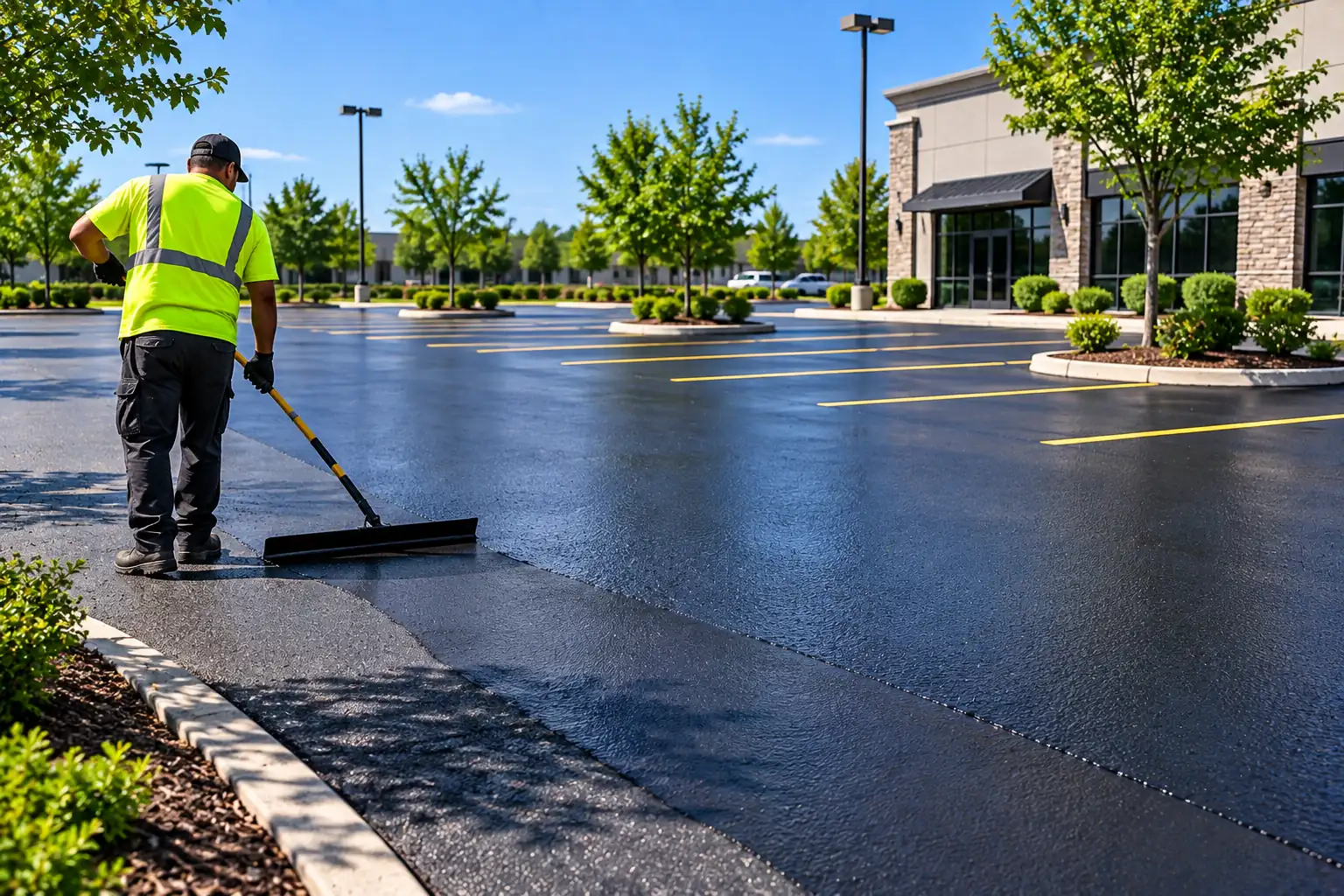 20 Sep 2026 Orange County, CAHow Often Should Commercial Parking Lots Be Sealcoated?
 -
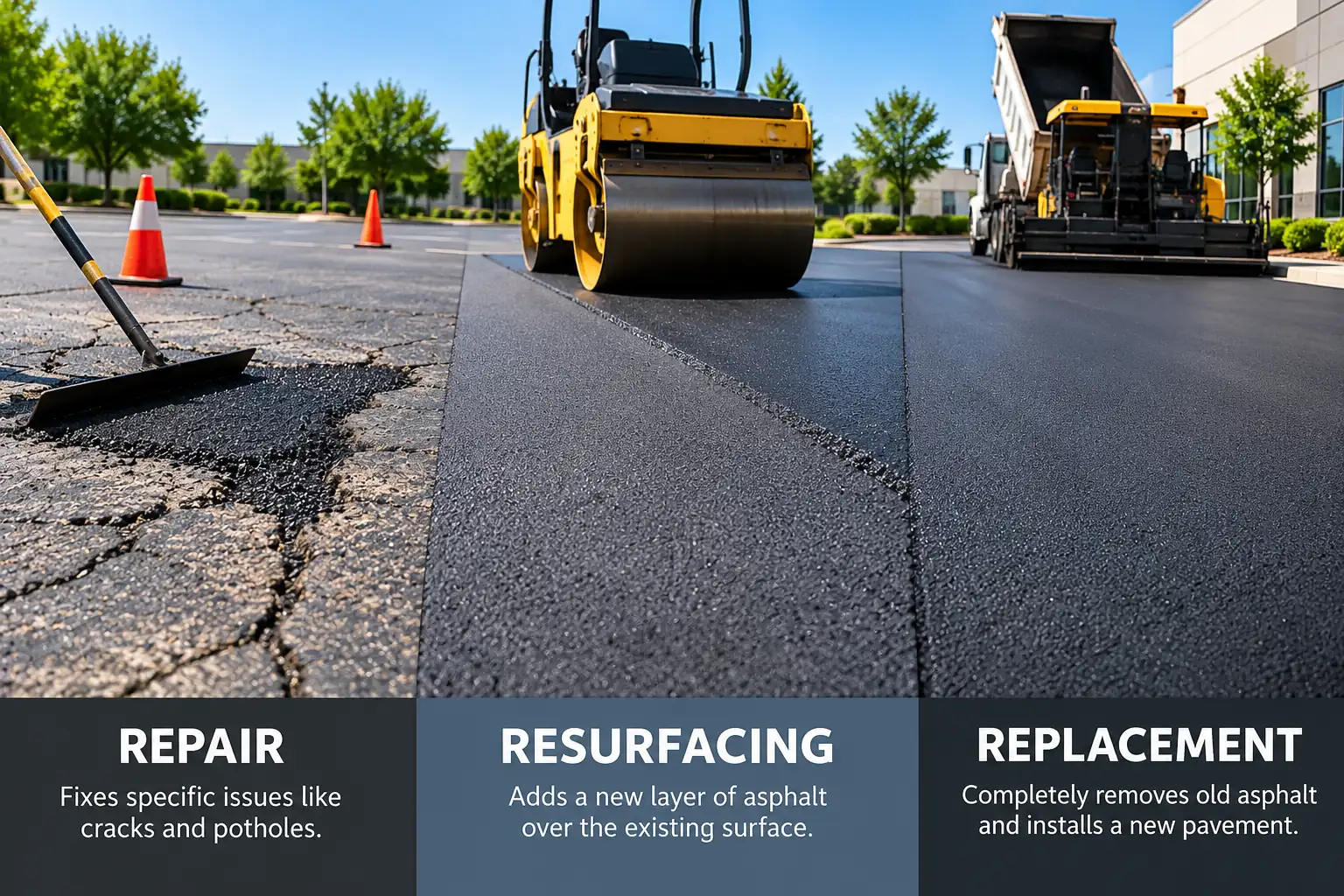 20 Sep 2026 Orange County, CAWhat Is the Difference Between Asphalt Repair, Resurfacing, and Replacement?
 -
 14 Sep 2026 Riverside, CAHow Long Does Asphalt Last in Riverside, CA?