
How Long Does an Asphalt Driveway Really Last in Orange County?
- July 28, 2026
- Orange County, CA
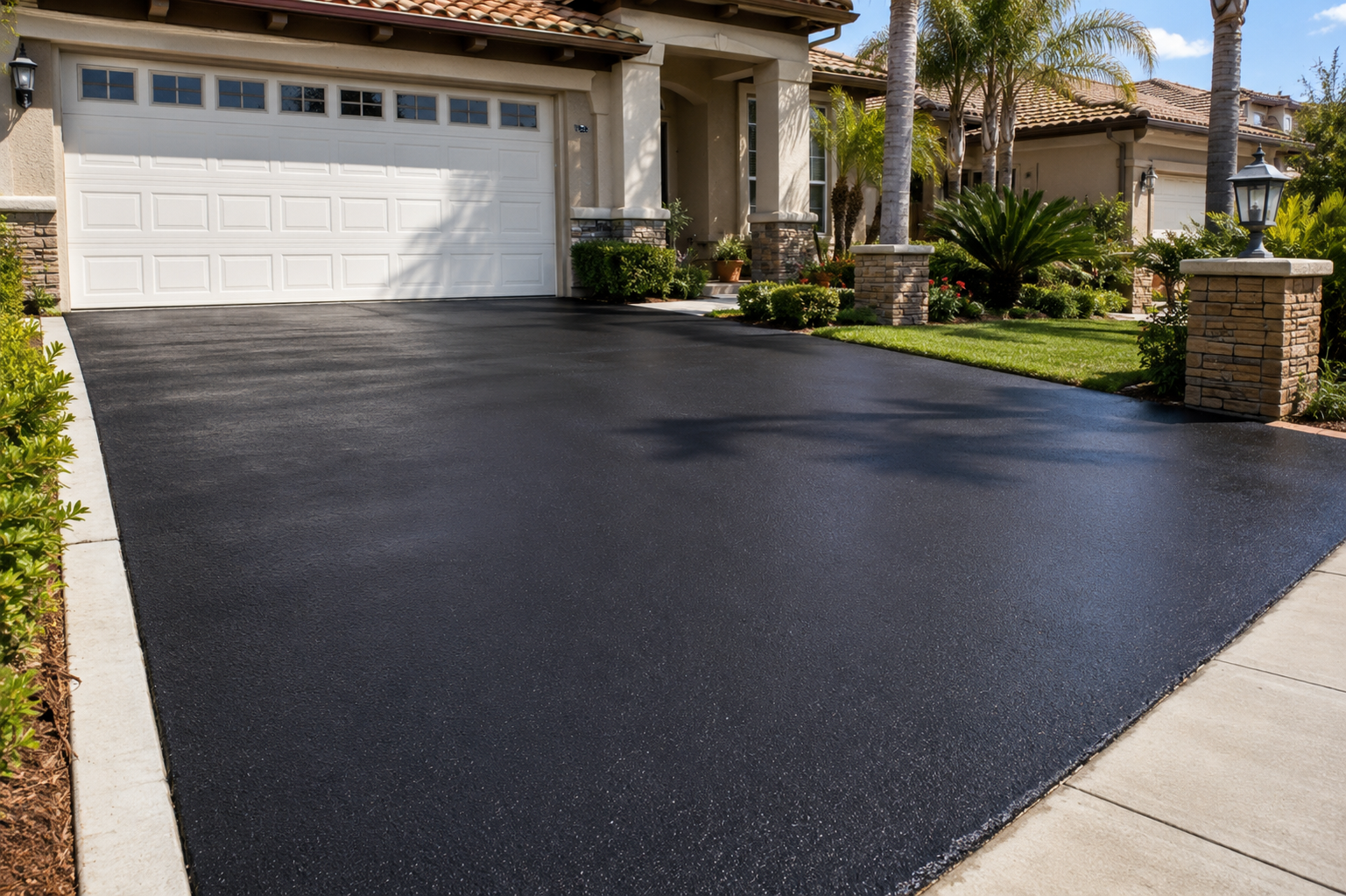
How Long Does an Asphalt Driveway Really Last in Orange County?
Twenty to thirty years. That’s the honest range for a well built asphalt driveway here in Orange County, assuming the base was done right and it gets at least a little care over the years. If you’re standing outside right now staring at a crack and wondering if it’s a big deal, you’re asking a question almost every homeowner asks eventually.
There’s no single answer that fits every property though. A driveway in Anaheim Hills getting hammered by direct sun all summer is going to age differently than one sitting under a canopy of trees in Fullerton. Soil, drainage, how it was installed in the first place, and whether anyone’s kept up with maintenance all factor in.
Below we’ll get into what actually drives that lifespan, what cuts it short, and what’s worth doing if you want to squeeze every year you can out of your driveway.
How Long Does Asphalt Actually Last?
Twenty to thirty years, give or take, for a properly installed driveway that gets basic upkeep. That number is a best case scenario though, not a promise. Skip maintenance for years or build over a base that wasn’t compacted right, and you could lose a decade or more off that number, often without realizing it until the damage is already sitting there.
Does Installation Quality Make a Difference?
It’s honestly the biggest factor, and the one homeowners think about the least. Even a great asphalt mix falls apart fast over an unstable base or without proper drainage built in from the start. Grading, how well the base was compacted, and asphalt thickness are usually why two driveways that look nearly identical end up with wildly different lifespans, one lasting twelve years and the other thirty. If you’ve ever wondered why your neighbor’s driveway from the same era looks so much better than yours, this is almost always the reason.
What Shortens an Asphalt Driveway’s Lifespan?
More than anything, it’s a base that wasn’t compacted properly before paving even began. Once that happens, the surface above it shifts and cracks no matter how good the asphalt itself was. Standing water, tree roots creeping up from underneath, and cars parked in the exact same spot day after day all add to the wear too. Most driveways that fail early aren’t failing because of the paving work. They’re failing because of what happened, or didn’t happen, before the crew ever showed up.
Why Does Orange County Heat Affect Asphalt So Much?
Long summer heat softens the binder inside asphalt, which leaves the surface more prone to rutting under weight. Inland spots like Anaheim and Santa Ana usually feel this more than coastal neighborhoods, where the ocean breeze keeps things a bit cooler. Coastal driveways aren’t spared entirely though. Warm days followed by cool nights create their own kind of expansion and contraction, and over years that leads to fine surface cracking as well. Different parts of the county, different wear patterns, but the same underlying stress on the material either way.
Does Sun Exposure Really Matter That Much?
Yes, quite a bit actually. UV exposure slowly dries out the oils that keep asphalt flexible, which makes the surface more brittle the longer it sits in direct sun. A driveway with full southern exposure and zero shade will usually crack and fade sooner than one with some tree cover. That’s a big part of why sealcoating exists. Think of it like sunscreen for your driveway, protecting the binder before UV damage turns into something structural.
How Often Should You Sealcoat an Asphalt Driveway?
Every two to three years works for most driveways around here, though sun exposure and how much traffic it gets can shift that timeline a bit. New asphalt needs about six months to a year to cure before that first coat should go on. Putting it off for a while won’t cause instant failure, but the surface will age faster than it needs to, especially if it sits in full sun with nothing shading it.
What Are the Early Warning Signs of a Failing Driveway?
Small cracks, fading, and a bit of puddling after rain are usually the first things you’ll notice. Cracks under a quarter inch wide are typically cheap to fix if you catch them early, mainly because water hasn’t had much of a chance to work its way into the base yet. Leave it alone long enough and that water eventually seeps down and weakens the base itself, which is really where the trouble starts. Catch it early and you’re usually looking at a patch or a seal job. If your driveway already has cracking spread across most of the surface rather than a spot or two, our guide on whether asphalt repair or replacement makes more sense can help you figure out which way to go.
Local and Environmental Factors That Affect Longevity
Heat isn’t the only thing Orange County throws at a driveway. Irrigation runoff from landscaping soaks into pavement more than people realize, hillside drainage in areas like Anaheim Hills sends water straight across driveways during storms, and clay soils common around Santa Ana and Irvine tend to expand and shift whenever moisture levels change. Then there are atmospheric river storms, which Southern California gets during wetter winters, and those tend to expose drainage issues that had been quietly building for years all at once. Older ranch style homes in Fullerton bring their own wrinkle too, since a lot of them have mature tree roots that nobody accounted for when the driveway went in decades ago. Knowing what your property is actually dealing with helps set realistic expectations for how long your driveway will hold up.
Maintenance Habits That Add Years to Your Driveway
Sealcoating on a regular schedule, filling cracks the moment they show up, and keeping water moving away from the surface are the three things that matter most. Beyond that, try not to park heavy equipment in the same spot for weeks at a time, and clear off debris that traps moisture against the asphalt. None of this takes much effort in the grand scheme of things. It’s mostly about catching the small stuff before it turns into a base level problem that ends up requiring a full repave.
FAQs
Does asphalt crack more in Orange County than other climates?
Not really more, just differently. Inland heat softens the surface while coastal temperature swings tend to cause finer surface cracking over time.
Can I sealcoat a driveway myself?
You can, but a professional job usually lasts longer and catches cracks underneath that DIY attempts often miss or make worse.
Is resurfacing cheaper than a full driveway replacement?
Usually, yes. Resurfacing works fine when the base is still solid, while a full replacement only becomes necessary once that base has failed.
How do I know if my driveway needs patching or full replacement?
A few isolated cracks or small dips usually just need patching, while crumbling or sinking across a wider area points to base failure.
Does tree root damage always mean repaving?
Not always. Root barriers and some localized patching handle it plenty of the time, but roots that keep coming back usually mean a bigger fix is on the way.
Not Sure Whether Your Driveway Has 5 Years or 15 Years Left?
No two driveways age the same way, even ones that look nearly identical from the curb. Husky Asphalt Paving can take a look at yours, explain what’s actually driving the wear, and help you figure out whether maintenance, repairs, resurfacing, or a full replacement makes the most sense for your budget. A lot of the time the answer is simpler, and cheaper, than people expect. Reach out to Husky Asphalt Paving for a straightforward look at where your driveway actually stands.
Trending Posts
-
 20 Sep 2026 Riverside, CASealcoating vs Resurfacing: Which Does Your Lot Need?
 -
 20 Sep 2026 Riverside, CAHow Thick Should a Commercial Parking Lot Be in Riverside?
 -
 20 Sep 2026 Orange County, CAHow Often Should Commercial Parking Lots Be Sealcoated?
 -
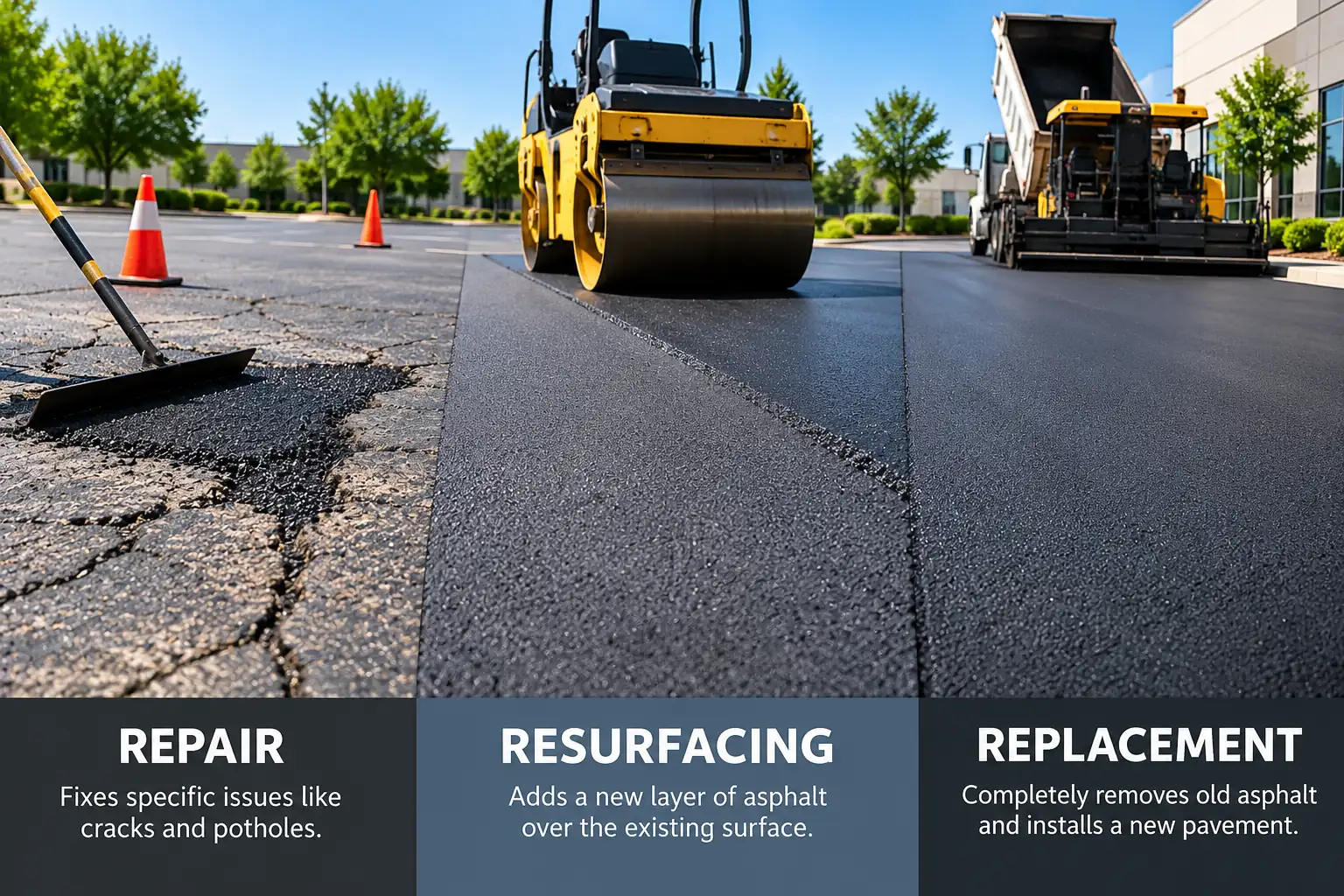 20 Sep 2026 Orange County, CAWhat Is the Difference Between Asphalt Repair, Resurfacing, and Replacement?
 -
 14 Sep 2026 Riverside, CAHow Long Does Asphalt Last in Riverside, CA?