How Loading Docks Damage Parking Lots in Orange County
- August 10, 2026
- Orange County, CA
How Loading Docks Damage Parking Lots in Orange County
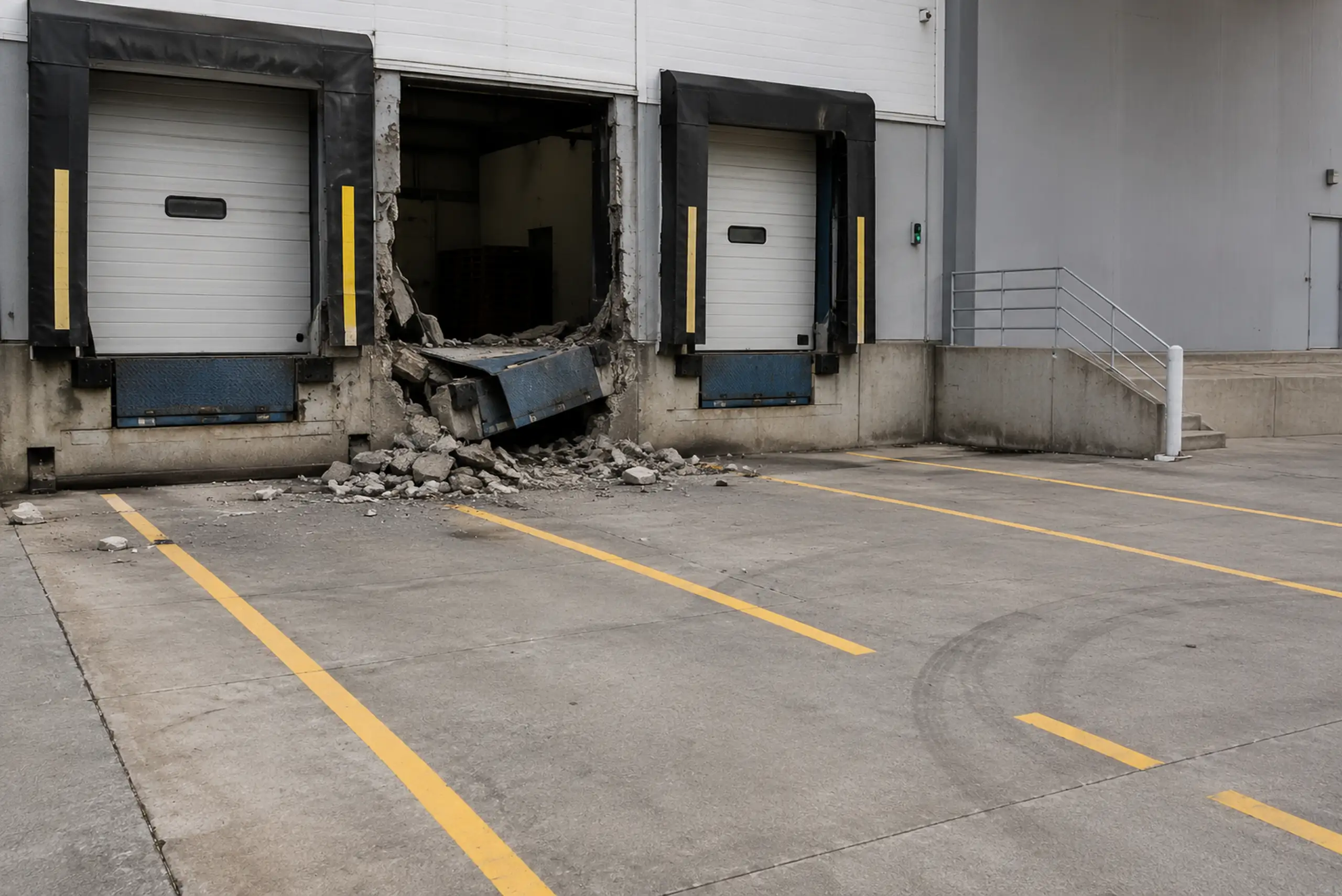
Walk any commercial property with a loading dock and you’ll usually spot the same thing. The rest of the lot looks fine, but the area right around the dock is rutted, cracked, or sunk in a few inches lower than everything around it. That’s not a coincidence and it’s not bad luck either. Loading docks put a specific kind of stress on asphalt that the rest of a parking lot never really has to deal with.
If you manage a warehouse, distribution center, or any property with regular truck traffic in Orange County, this is probably a section of your lot you’ve already worried about. Between the weight, the constant stopping and starting, and how often trucks sit idling in the exact same spot, dock areas age faster than the rest of the property by a wide margin.
Here’s what’s actually causing that damage and what tends to slow it down.
Why Do Loading Dock Areas Wear Out Faster Than the Rest of the Lot?
Loading docks concentrate weight, heat, and repeated stress into a small area, which is exactly the combination that breaks asphalt down fastest. A typical parking stall sees a car roll through and leave. A dock sees an eighteen wheeler pull in, sit for twenty minutes to an hour while it’s loaded or unloaded, then pull out slowly enough to twist and grind the surface underneath its tires the whole time.
How Does Truck Weight Actually Damage Asphalt?
A loaded truck puts way more pressure on the base underneath the asphalt than any passenger car does, and that pressure adds up. Month after month of that kind of weight compressing the same spot eventually leads to rutting, those shallow grooves you see running along the exact path trucks take every day. Once those grooves start forming, they hold water, and that water just makes everything worse from there.
Why Does Idling Traffic Make It Worse?
When a truck sits in one spot for a while, all that weight and heat gets pushed into a small patch of pavement instead of spreading out. Now factor in Orange County’s warmer stretches, especially inland around Anaheim and Santa Ana, and the asphalt under a parked trailer can actually soften just enough to give a little under that weight. It happens slowly, but a few years of daily deliveries and it really starts to show.
Does Turning and Maneuvering Play a Role Too?
Honestly, yes, and it’s one people don’t think about nearly enough. When a truck backs into a dock, the tires twist against the pavement instead of just rolling over it, and that scrubbing motion does a number on the surface that normal parking traffic never causes. Tight dock areas make it worse too, since drivers usually have to work the wheel harder to line things up, which grinds down that top layer of asphalt even faster.
How Does Orange County’s Climate Add to the Problem?
Heat softens asphalt’s binder, and dock areas already dealing with concentrated weight and heavy traffic feel that softening more than any other part of a lot. Inland properties see this more directly through sustained summer heat, while coastal properties deal with a different version of the same problem through daily temperature swings that stress the surface in a different way. Add in clay soils common around parts of Irvine and Santa Ana, which shift with moisture, and a dock area built on a marginal base can fail years earlier than the rest of the property.
Can Dock Areas Be Fixed Without Repaving the Whole Lot?
Often, yes. If the damage is isolated to the dock area and the rest of the lot is holding up fine, a targeted repair or a thicker asphalt section just around the dock usually solves the problem without touching the surrounding pavement. This is one of the more cost effective moves for property owners, since it treats the actual stress point instead of paying to redo an entire lot that mostly doesn’t need it.
What Helps Loading Dock Areas Last Longer?
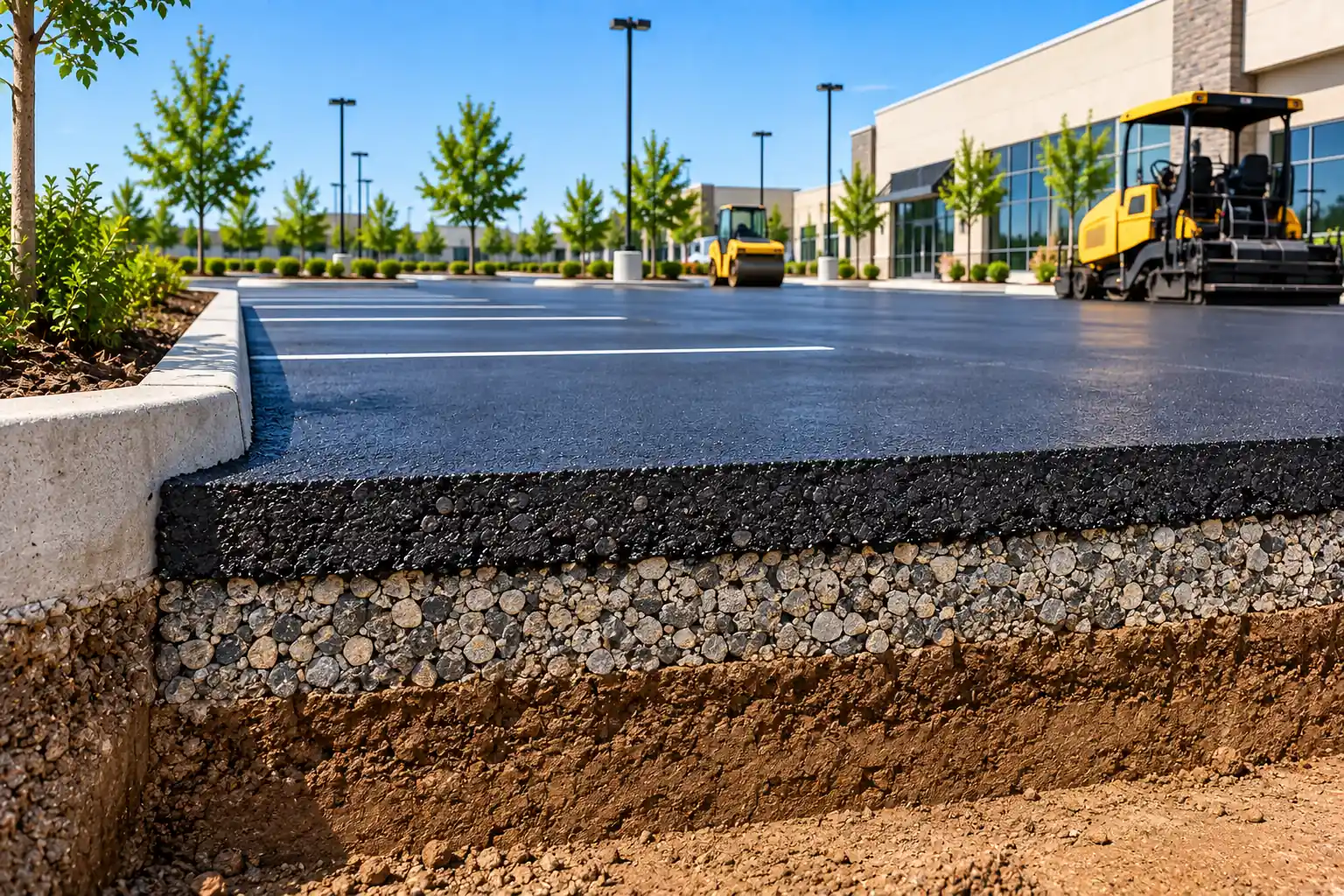
Thicker asphalt sections built specifically for heavy load areas, along with proper base compaction underneath, make the biggest difference long term. Beyond that, keeping drainage clear so water doesn’t pool in the ruts, and resealing dock areas more often than the rest of the lot, both help slow the wear down. Some properties also switch to concrete pads just under the dock itself, since concrete handles concentrated static weight better than asphalt does, even though asphalt still works fine for the surrounding traffic areas.
FAQs
Should loading dock pads be concrete instead of asphalt?
Concrete often holds up better under the concentrated static weight of parked trucks, though asphalt is usually fine for the surrounding drive lanes.
How thick should asphalt be near a loading dock?
Heavy load areas typically need thicker asphalt sections than standard parking stalls, often with a stronger base built specifically for repeated truck weight.
How often should loading dock areas be resurfaced?
Dock areas usually need attention more often than the rest of a lot, sometimes every few years depending on truck volume and how long they idle.
Can rutting near a loading dock be repaired without full reconstruction?
Yes, in many cases a localized repair or a reinforced overlay fixes rutting without requiring a full rebuild of the surrounding parking lot.
Why does water pool near loading docks specifically?
Rutting from truck weight creates low spots that trap water, and that trapped water speeds up base damage if it isn’t addressed early.
Dealing With a Worn Down Loading Dock Area?
If the dock section of your lot is aging faster than everything around it, that’s usually fixable without a full property repave. Husky Asphalt Paving has spent over 30 years working commercial properties across Orange County, including plenty of warehouses and distribution lots dealing with exactly this kind of wear. Our road construction services cover everything from targeted dock repairs to full lot reconstruction, and you can learn more about our work across the county on our Orange County paving page if you want to see what else we handle.
Trending Posts
-
 21 Oct 2026 Riverside, CAAsphalt vs Concrete Driveways in Riverside's Heat
 -
21 Oct 2026 Riverside, CAHow Long Does an Asphalt Driveway Last in Riverside?
-
 20 Sep 2026 Riverside, CASealcoating vs Resurfacing: Which Does Your Lot Need?
 -
 20 Sep 2026 Riverside, CAHow Thick Should a Commercial Parking Lot Be in Riverside?
 -
20 Sep 2026 Orange County, CAHow Often Should Commercial Parking Lots Be Sealcoated?